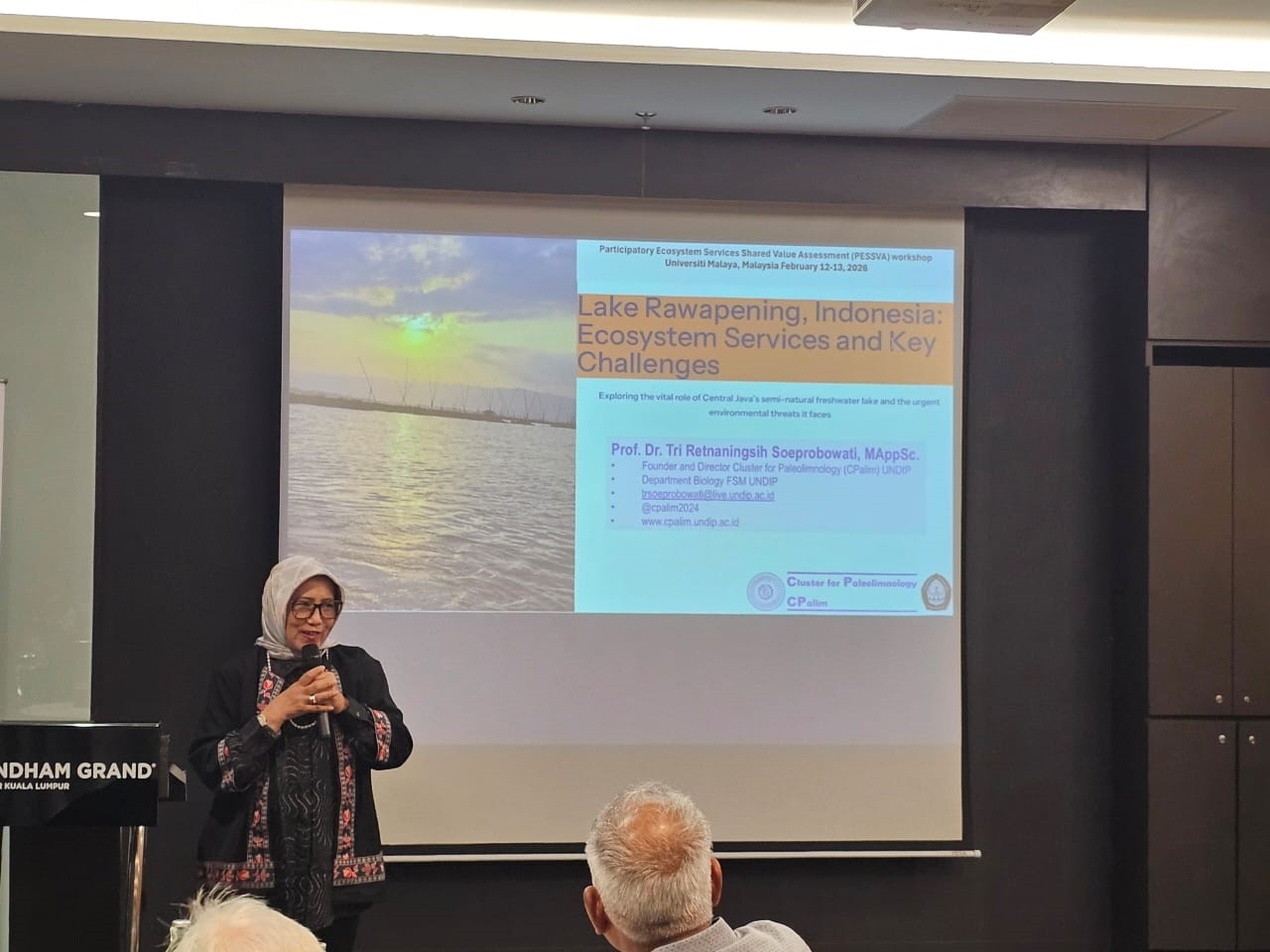
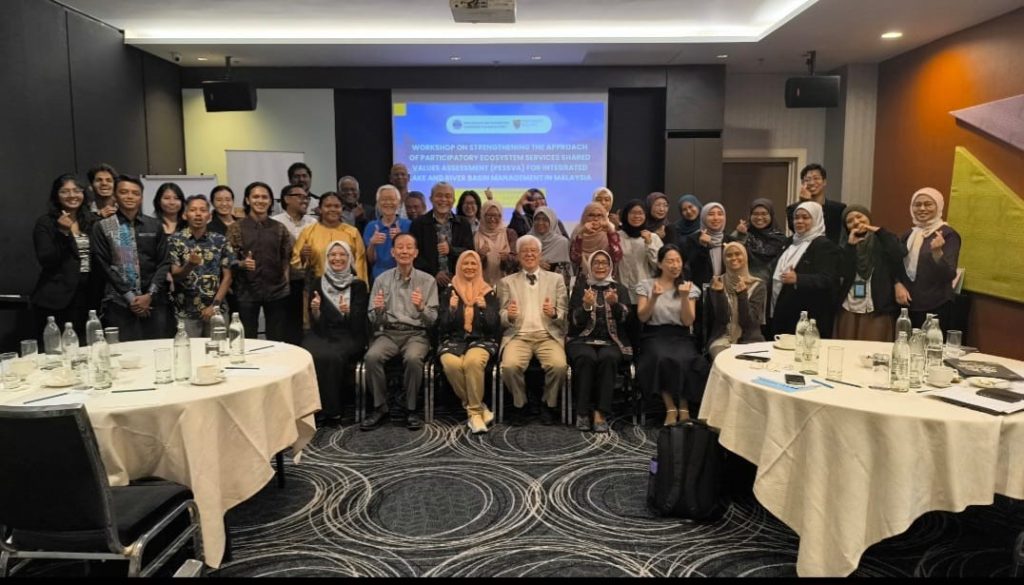
The Faculty of Science and Mathematics, Universitas Diponegoro, once again demonstrated its international engagement through the participation of Prof. Dr. Tri Retnaningsih Soeprobowati as a speaker at the Workshop on Strengthening the Participatory Ecosystem Services Shared Value Assessment (PESSVA) for Integrated Lake and River Basin Management in Malaysia. The event was held on 12 February 2026 at Wyndham Grand Bangsar, Kuala Lumpur, Malaysia, and was attended by academics and lake management experts from various countries.
The workshop was a collaboration between the International Lake Environment Committee (ILEC) and Universiti Malaya, aiming to strengthen the PESSVA framework as a participatory approach to integrated lake and river basin management. This forum served as a platform for sharing experiences and developing science-based strategies to support sustainable water resource management across Asia.
During the event, Prof. Tri Retnaningsih delivered a presentation titled “Lake Rawapening, Indonesia: Ecosystem Services and Key Challenges.” The presentation highlighted the strategic role of Lake Rawapening as a semi-natural freshwater ecosystem in Central Java that supports fisheries, agriculture, water security, and community livelihoods. The lake also holds significant value as a biodiversity habitat and has strong potential for ecotourism development.
In addition to showcasing its ecosystem services, the presentation addressed major challenges faced by Lake Rawapening. Issues such as eutrophication, sedimentation, and the invasion of water hyacinth were highlighted as key threats affecting water quality, biodiversity, and fisheries productivity. These conditions demonstrate the urgent need for an integrated approach involving multiple stakeholders.
Through the Participatory Ecosystem Services Shared Value Assessment (PESSVA) approach, Prof. Tri emphasized the importance of integrating scientific knowledge, technology, and community participation to develop sustainable lake management solutions. This approach combines local knowledge, scientific data, and spatial mapping to produce evidence-based and collaborative decision-making.
FSM UNDIP’s participation in this international forum reaffirms the faculty’s commitment to strengthening global collaboration, advancing environmental research, and contributing to ecosystem conservation and sustainable water resource management at regional and international levels.