
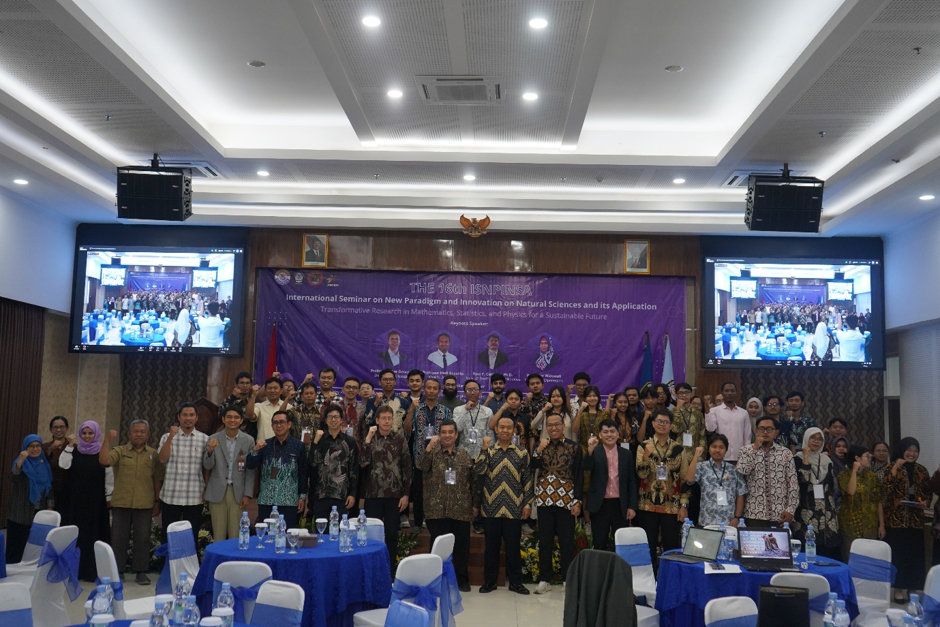
The Faculty of Science and Mathematics (FSM), Diponegoro University (UNDIP), once again hosted its flagship international conference, The 16th International Seminar on New Paradigm and Innovation on Natural Sciences and its Application (ISNPINSA). Carrying the theme “Transformative Research in Mathematics, Statistics, and Physics for a Sustainable Future,” the conference was successfully held in a hybrid format on 16 July 2026 at the Acintya Prasada Building, FSM UNDIP, Semarang.
Co-hosted by the University of Southeastern Philippines (USeP), the conference served as a strategic platform for scientists and researchers from around the world to exchange ideas, foster practical technological innovations, and strengthen cross-sector collaboration among academia, industry, and government for the benefit of society.
The event began with remarkable enthusiasm. In his report, the Chair of the Organizing Committee, Benediktus Panji Pradipta, S.Si., M.Sc., announced that 77 presenters were ready to showcase their latest research innovations in the fields of physics, mathematics, and statistics. He also extended a warm welcome to the international research delegates participating in this prestigious scientific forum.
This sense of pride was echoed by the Dean of FSM UNDIP, Prof. Dr. Kusworo Adi, S.Si., M.T. In his opening remarks, he emphasized that ISNPINSA is more than an annual event—it is the faculty’s signature international conference. He explained that the theme of transformative research was intentionally chosen because researchers in the fundamental sciences play a crucial role in addressing the increasingly complex global challenges faced by society today.
The conference was officially opened by the Vice Rector IV for Research, Innovation, Collaboration, and Public Communication of UNDIP, Wijayanto, S.IP., M.Si., Ph.D. He invited participants to reflect on the pressing global issues confronting the world today, including climate change, the transition to sustainable energy, environmental degradation, and the rapid disruption brought about by artificial intelligence (AI).
While commending FSM for consistently being one of the university’s top three faculties in international scientific publications, Wijayanto reaffirmed UNDIP’s research philosophy of “Noble and Valuable.” He stressed that research should not merely become a source of academic pride through journal publications but must also generate tangible benefits for humanity.
The conference theme was further exemplified through presentations delivered by distinguished keynote speakers from leading institutions around the world. The keynote session opened with Prof. Hadi Susanto from Khalifa University, United Arab Emirates, who presented his research on the application of neural networks for real-time prediction of rogue waves, aiming to improve maritime safety and prevent ocean-related disasters.

The next keynote speaker, Roel F. Ceballos, Ph.D. from USeP, Philippines, discussed the role of modern causal statistics, including Directed Acyclic Graphs (DAGs) and Causal Machine Learning. He highlighted how these approaches help overcome observational bias, enabling more accurate decision-making and evidence-based public policies.
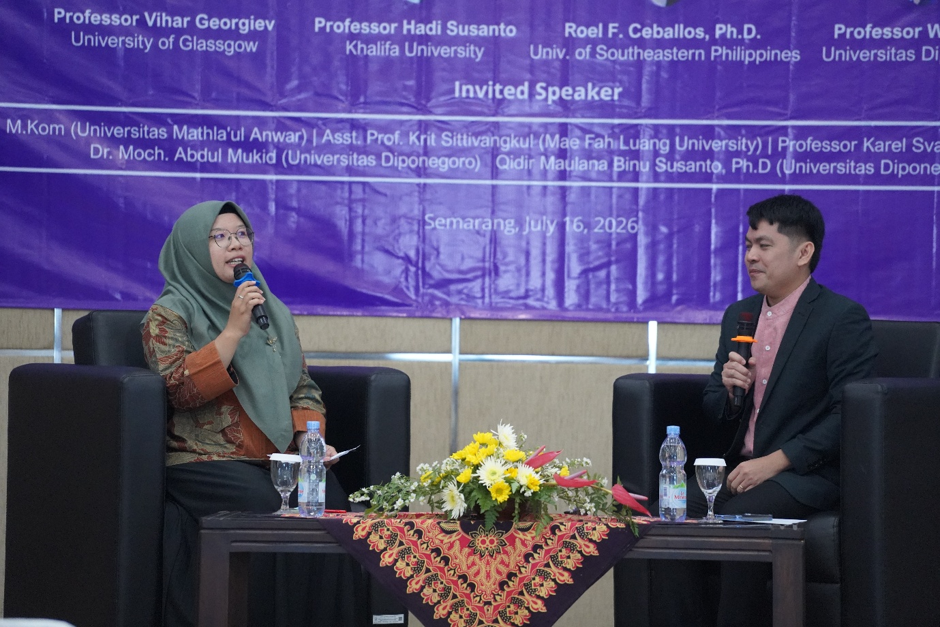
Representing UNDIP, mathematics expert Prof. Widowati demonstrated the effectiveness of mathematical modeling in epidemiology. Her presentation focused on strategies for controlling tuberculosis (TB) outbreaks, showing that an optimal combination of interventions—including education, therapy, and medical treatment—was significantly more effective in reducing disease transmission than any single strategy alone.
The plenary session concluded with a presentation by Prof. Vihar Georgiev from the University of Glasgow, United Kingdom, who shared insights into cutting-edge developments in nanoelectronics, including the application of machine learning in medical biosensors and atomistic simulations that serve as the foundation for future quantum computing technologies.
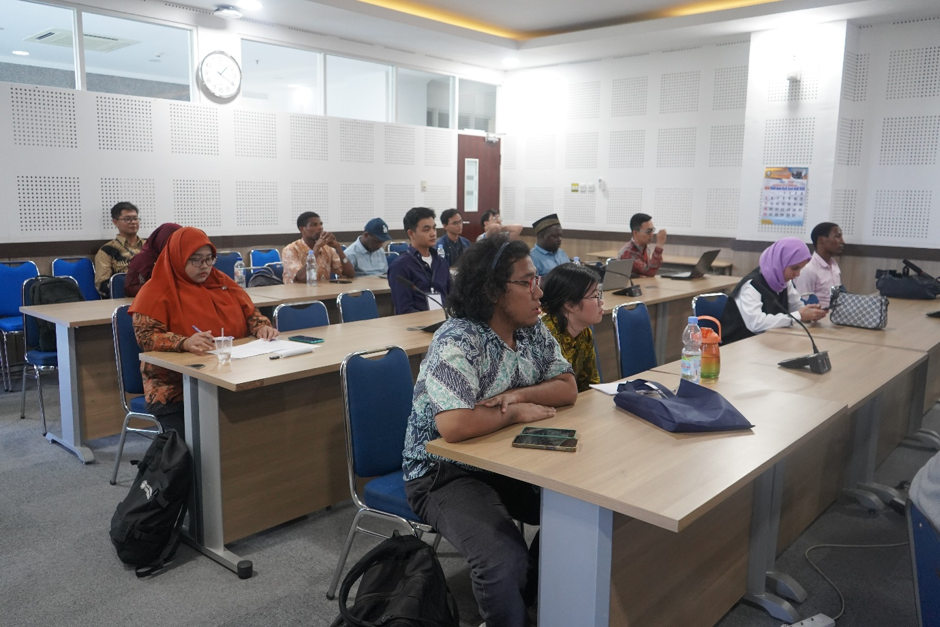
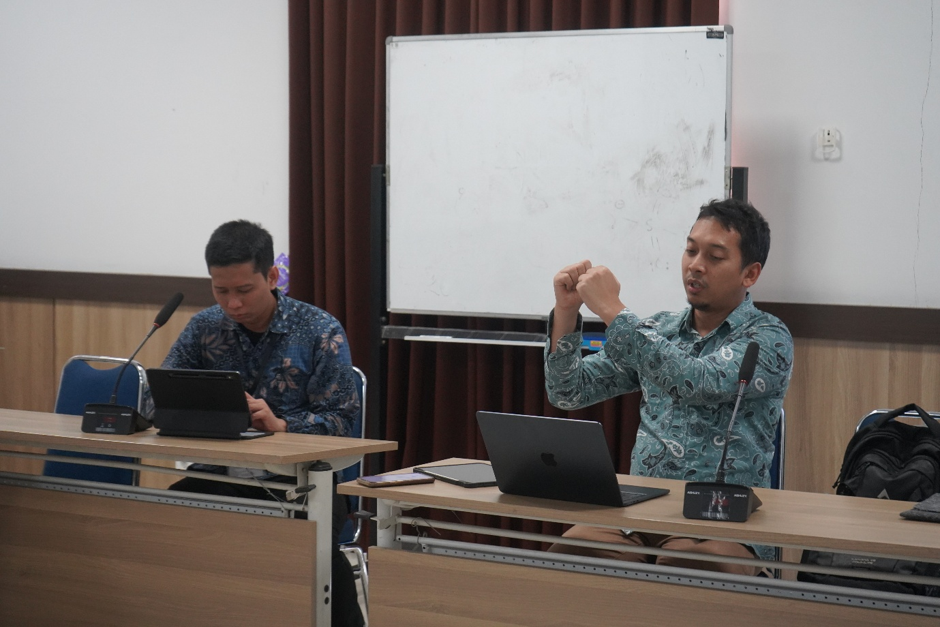
The scientific discussions continued in the parallel sessions, featuring presenters and invited speakers from various international institutions. Among the distinguished speakers were Prof. Carl Swatlena (Tokyo Metropolitan University), Assoc. Prof. Crit City Fangul (Mae Fah Luang University), Dr. Robbie Risky (Universitas Mathla’ul Anwar), and Dr. Mohamad Abdul Mukit (Diponegoro University). Selected papers from these sessions will be published in Scopus-indexed conference proceedings as well as in the faculty’s partner journals.
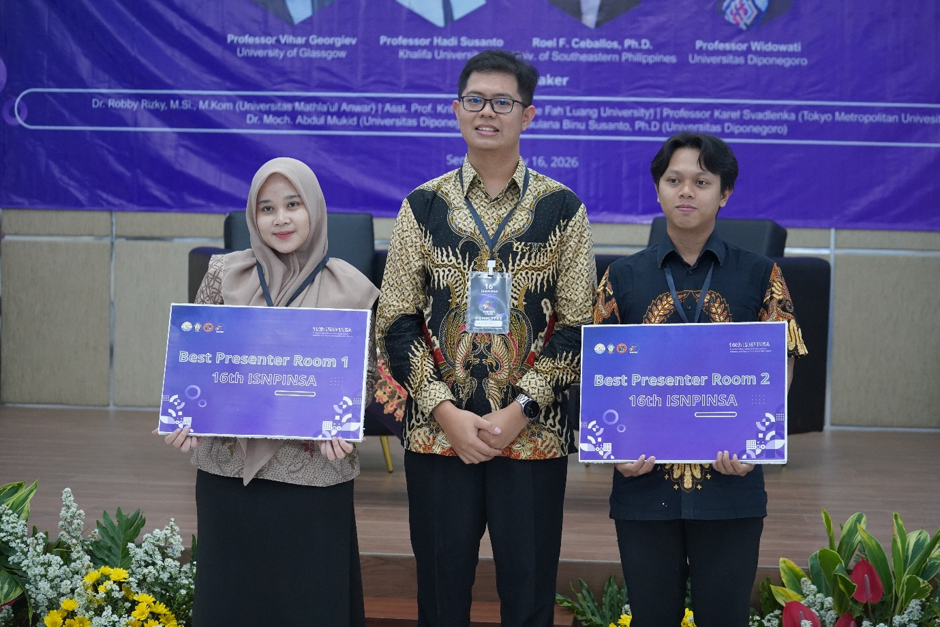
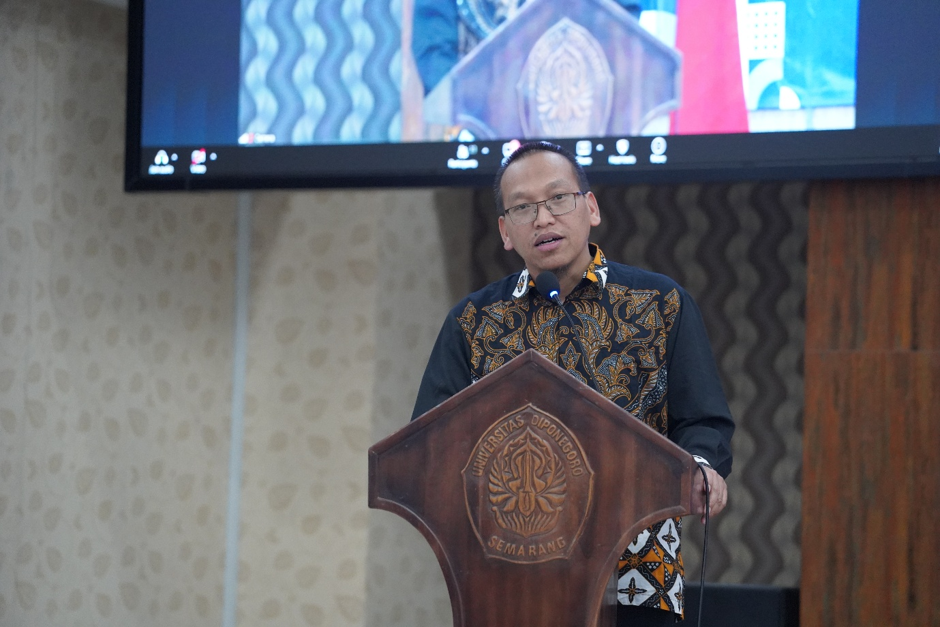
The 16th ISNPINSA concluded with a closing ceremony officiated by the Vice Dean for Resources of FSM UNDIP, Dr. Eng. Adi Wibowo, S.Si., M.Kom. The ceremony also featured the presentation of the Best Presenter Awards, recognizing outstanding research contributions. More than a celebration of academic excellence, this moment reaffirmed ISNPINSA’s growing role as a catalyst for impactful global scientific collaboration that contributes meaningfully to society.