
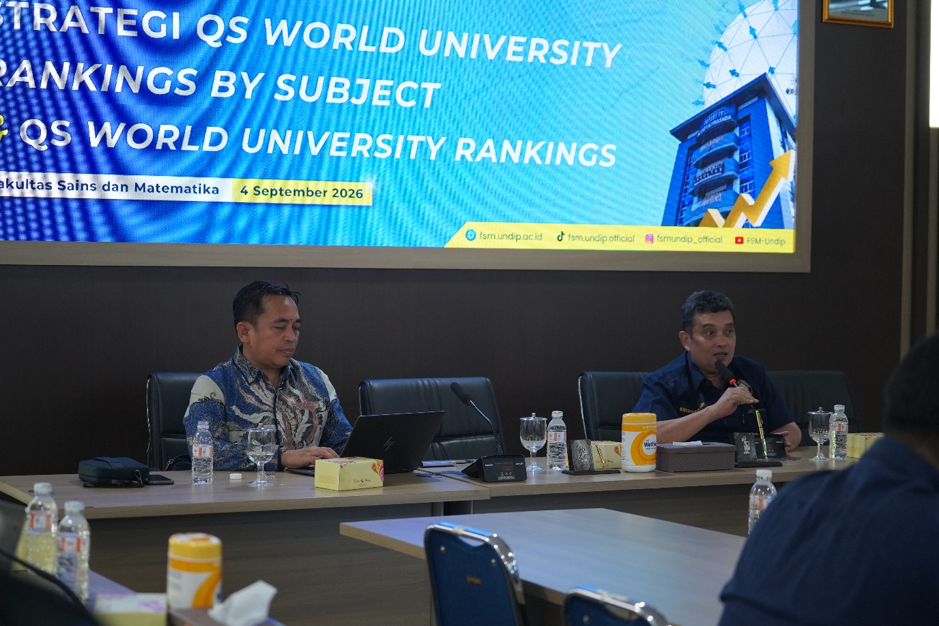
The Faculty of Science and Mathematics (FSM), Universitas Diponegoro, held an event entitled “Strategies for QS World University Rankings by Subject and QS World University Rankings” on Friday, 4 September 2026, at the Meeting Room on the 4th Floor of the Acintya Prasada Building, FSM UNDIP. The event featured Prof. Dr. Ir. Hadiyanto, S.T., M.Sc., IPU, Director of Reputation, Partnerships, and Global Connectivity (DRKKG), Universitas Diponegoro, as the speaker.
The event was officially opened by the Dean of FSM UNDIP, Prof. Dr. Kusworo Adi, S.Si., M.T. In his remarks, the Dean stated that the event was part of FSM UNDIP’s efforts to support the enhancement of Universitas Diponegoro’s global reputation. Through this forum, all study programs were expected to gain a more comprehensive understanding of the various indicators used in the QS rankings and to identify strategic measures that could be implemented in accordance with the characteristics and strengths of their respective academic fields.
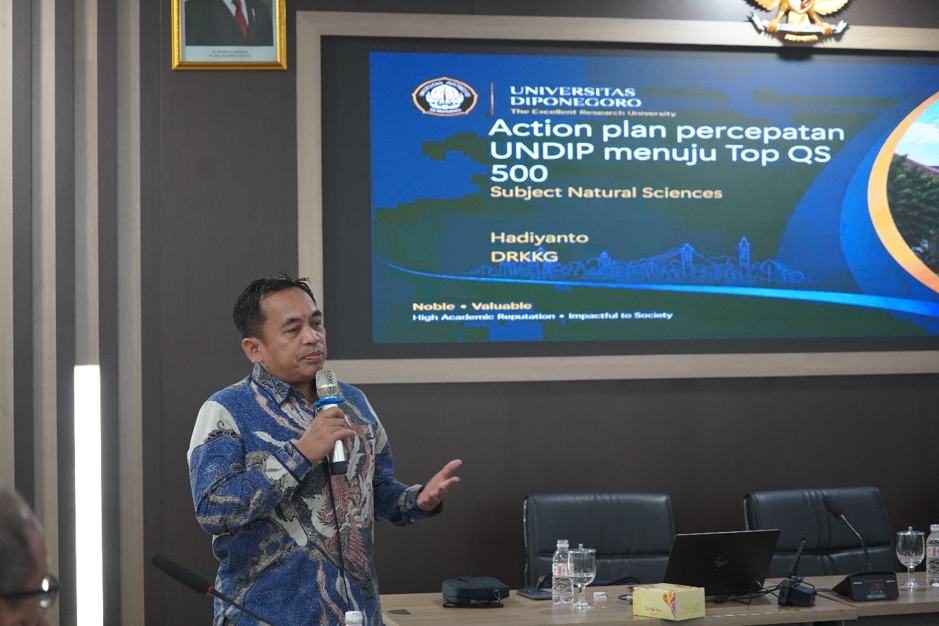
In his presentation, Prof. Hadiyanto outlined several strategies to accelerate Universitas Diponegoro’s progress in both the QS World University Rankings and the QS World University Rankings by Subject. The discussion covered the strengthening of Academic Reputation (AR) and Employer Reputation (ER), improving the quality and impact of scientific publications, increasing citations and H-index performance, as well as developing the International Research Network (IRN).
Prof. Hadiyanto also explained that subject mapping in the QS World University Rankings by Subject does not always correspond directly to the names of study programs. Subject classification is related to academic disciplines, research topics, and publication categories. Therefore, producing high-quality publications that are relevant to researchers’ areas of expertise is an important element in strengthening the contribution of faculties and study programs to the university’s reputation.
In addition to publications, strengthening academic networks and international research collaboration was also highlighted. Sustainable partnerships with universities and institutions in various countries are expected not only to generate scientific collaboration, but also to expand academic networks and increase the international visibility of UNDIP’s research outputs.
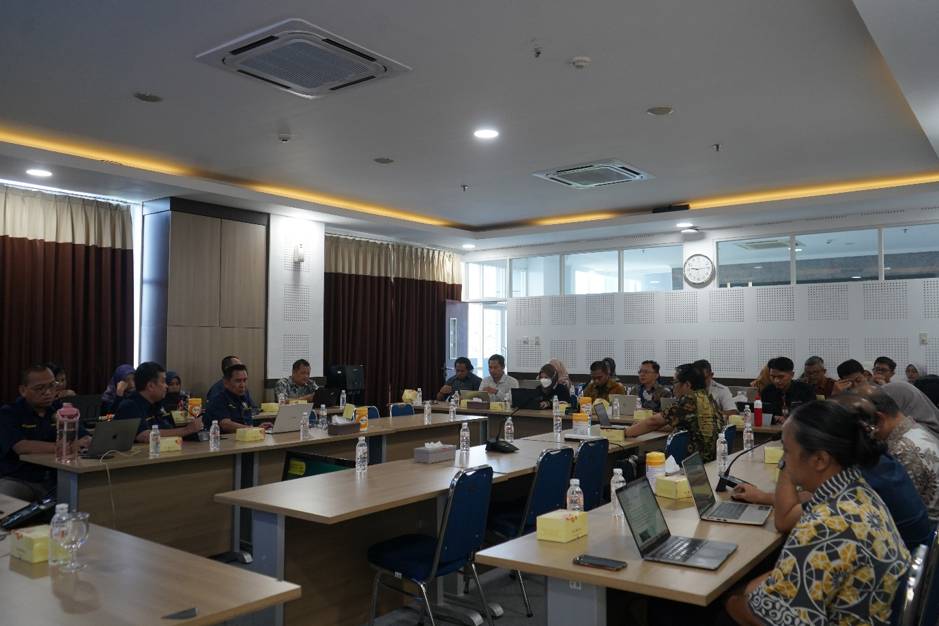
The event continued with an interactive discussion session covering a range of strategic issues, including the development of publications in reputable journals, subject mapping, strengthening international research networks, and optimizing the role of alumni and employers in supporting institutional reputation. The discussion involved faculty leaders, heads and secretaries of study programs, World Class University (WCU) coordinators, alumni coordinators, and other invited participants.
At the conclusion of the event, Prof. Hadiyanto encouraged the FSM UNDIP academic community to continue producing scholarly works in reputable, high-quartile journals while remaining aligned with their respective areas of expertise. By strengthening publication quality, international networks, as well as academic and graduate reputation, FSM UNDIP remains committed to contributing to the advancement of Universitas Diponegoro’s position in global university rankings.