

The Faculty of Science and Mathematics (FSM) at Diponegoro University continues to strengthen its World Class University (WCU) achievements through the implementation of an International Postdoctoral/Sabbatical Program in collaboration with the Advanced Medical & Dental Institute (IPPT) of Universiti Sains Malaysia (USM). Held from 27 October to 7 November 2025, the program featured Dr. Choirul Anam from the Department of Physics, FSM UNDIP, as the lead researcher, working alongside Dr. Noor Diyana Osman from IPPT USM. The primary focus of the program was the development and utilization of the IndoQCT software for objective, measurable, and internationally standardized assessment of CT Scan image quality.

The series of activities commenced on 27 October 2025 with a welcoming session and formal meeting with the Dean of FSM, followed by an initial discussion with the Head of the Physics Department. The agenda continued on 28 October 2025 with an in-depth discussion on detectability index using human observer models. During this stage, the researchers explored the Visual Grading Assessment (VGA), Receiver Operating Characteristic (ROC), and Alternative Forced Choice (AFC) approaches as foundations for medical image quality evaluation. On 29 October 2025, a guest lecture on mammography technology was held for the academic community, providing updates on breast imaging systems and patient safety standards.

Technical discussions continued on 30 October 2025, focusing on detectability index based on model observers (MO), including Non Pre-Whitening (NPW) and Channelized Hotelling Observer (CHO), both widely utilized in modern medical physics research. On 31 October 2025, the agenda featured a general lecture on diagnostic radiology dosimetry for medical physicists, emphasizing the importance of balancing image quality with patient radiation dose. This session offered valuable insights into the interconnectedness of dose measurement and image quality in daily clinical practice.
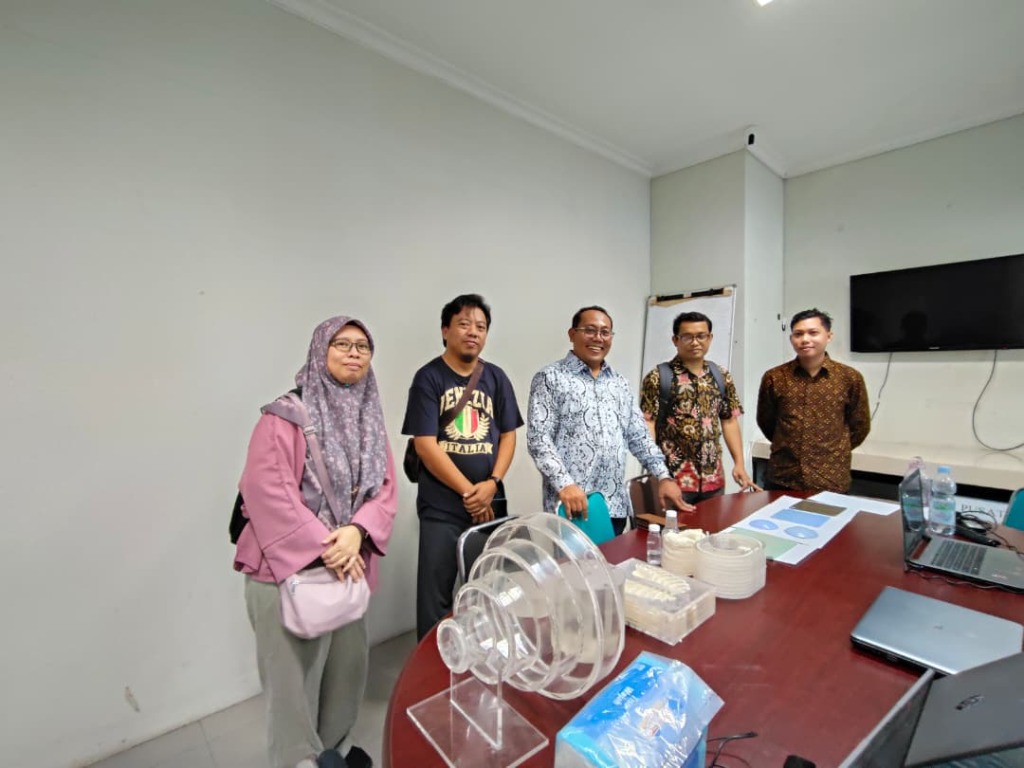
Entering the following week, discussions on 3 November 2025 shifted to advanced model observers (AMO), particularly the development of Non Pre-Whitening with Eye Filter (NPWE), which aims to align computational models more closely with the characteristics of the human visual system. On 4 November 2025, the program continued with laboratory visits to the smart materials research center led by Prof. Heri Sutanto—particularly for phantom development—and the plasma physics research center managed by Prof. Muhammad Nur. These visits highlighted FSM UNDIP’s research capabilities and opened new avenues for interdisciplinary collaboration between medical physics, advanced materials, and plasma technology.

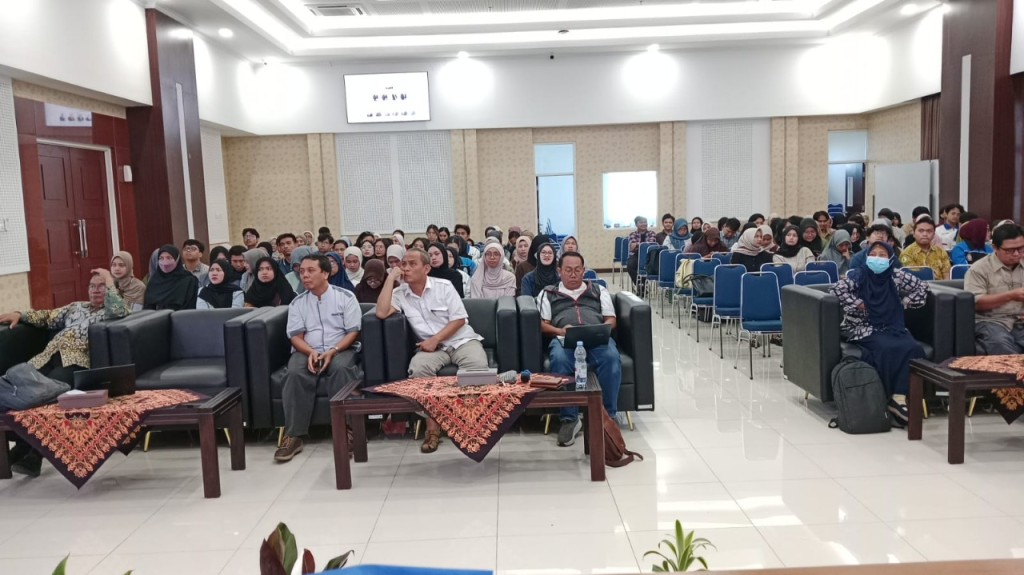
On 5 November 2025, another guest lecture on CT technology was conducted, discussing the latest advancements in CT Scan systems and the challenges in improving image quality. The following day, 6 November 2025, the agenda focused on discussions regarding detectability index using IndoQCT, accompanied by the development of a structured research design for IndoQCT-based detectability studies. The program culminated on 7 November 2025 with a dedicated session to formulate long-term research collaboration plans with faculty members, including joint publication initiatives and future medical physics research agendas.
Throughout the program, IndoQCT served as the core tool for standardized CT Scan image quality assessment. This postdoctoral study successfully demonstrated that IndoQCT holds strong potential as a national technological asset for medical image Quality Assurance (QA), while also supporting compliance with international standards. The discussions and experiments conducted from 27 October to 7 November 2025 resulted in a scientific manuscript prepared for submission to a high-quality international journal, strengthening FSM UNDIP’s global publication contributions.
The successful implementation of the WCU Postdoctoral Program marks a collective achievement for the Department of Physics and FSM UNDIP as a whole. Through the utilization of locally developed technology such as IndoQCT—supported by a robust international collaboration network—UNDIP reaffirms its position as an institution actively producing innovations and tangible solutions to improve healthcare quality. FSM UNDIP will continue to promote collaborative research, enhance faculty and researcher capacity, and advance research dissemination as part of its sustained commitment to becoming a globally competitive faculty, contributing to society, and supporting Diponegoro University’s vision as an impactful world-class institution.