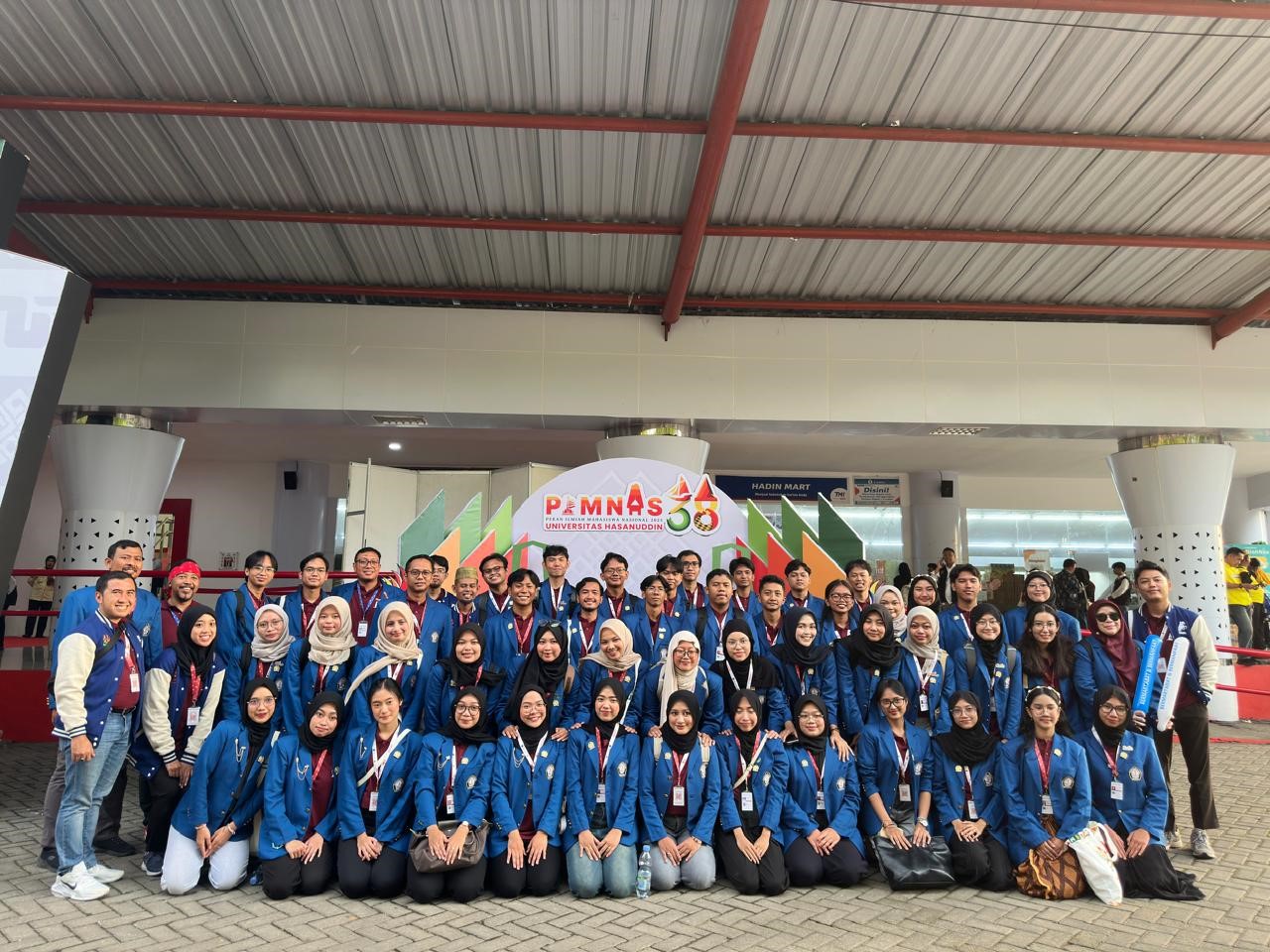
Semarang, 28 November 2025 – Students of the Faculty of Science and Mathematics (FSM) Universitas Diponegoro played an important role in leading UNDIP to remarkable success at the 38th National Student Scientific Week (PIMNAS) held at Universitas Hasanuddin, Makassar. Out of the total 14 medals won by UNDIP, which propelled the university to 4th place nationally, FSM students contributed two gold medals and three silver medals through three teams that emerged as winners in various schemes of the Student Creativity Program (PKM).
Overall, UNDIP brought home 3 gold, 1 silver, and 3 bronze medals in the poster category, as well as 1 gold, 4 silver, and 2 bronze medals in the presentation category. This achievement marks a significant leap compared to the previous year’s PIMNAS, when UNDIP was in 27th position. The contribution of three teams led by FSM students—under the PKM-K and PKM-RE schemes—formed an important part of this medal tally and demonstrated the strength of cross-disciplinary collaboration among UNDIP students.
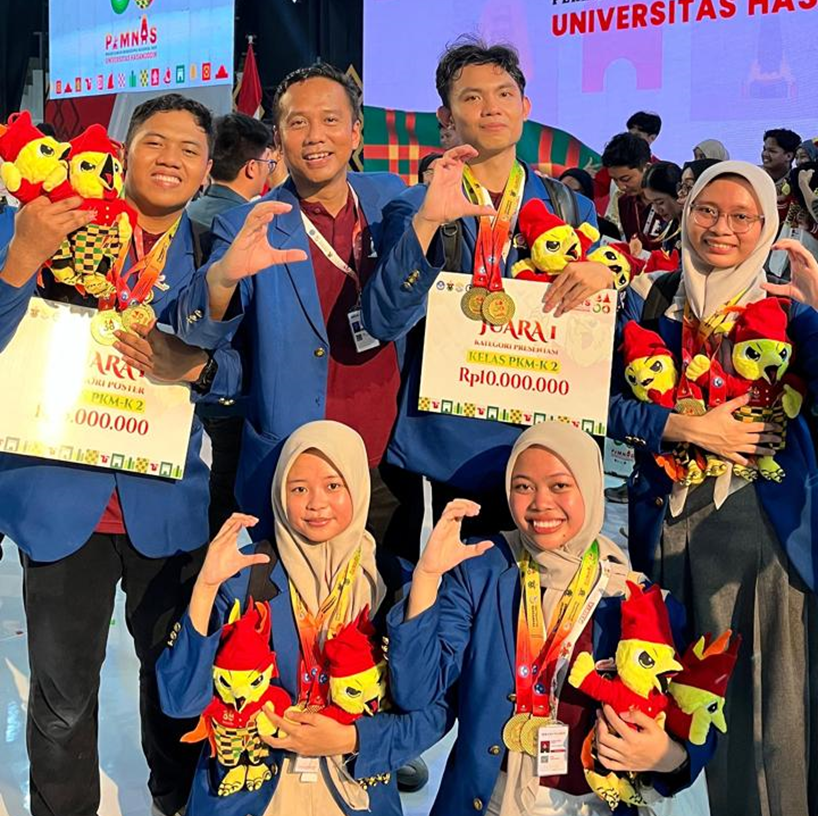
In the Entrepreneurship PKM (PKM-K) scheme, the team led by Bayu Saputra (FSM) with their work entitled “Chitoma: Inovasi Bisnis Edible Coating Berbasis Kulit Udang dan Kunyit untuk Mengatasi Food Loss dan Food Waste” (Chitoma: An Edible Coating Business Innovation Based on Shrimp Shells and Turmeric to Address Food Loss and Food Waste) succeeded in winning two gold medals at once, each for the presentation and poster categories. The team consists of Velin Yohanita (Faculty of Economics and Business), Salik Bahrudin (FSM), Siti Sofia Ranti (Faculty of Animal and Agricultural Sciences), and Argitta Nova Triana (Faculty of Medicine), under the supervision of Nor Basid Adiwibawa Prasetya, S.Si., M.Sc., Ph.D. (FSM). The success of the Chitoma team shows that scientific innovation combined with business perspectives can offer concrete solutions to issues of sustainable food.
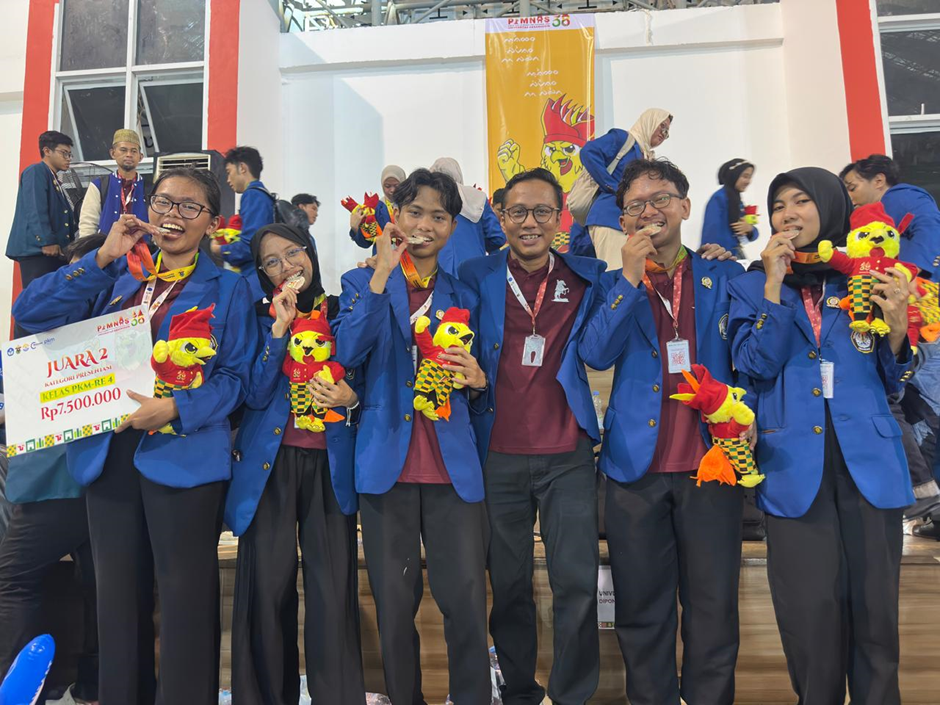
From the Exact Research PKM (PKM-RE) scheme, the team led by Ersha Dwi Ariwijayanti (FSM) also recorded an impressive achievement. Through research entitled “Sintesis TiO₂/Graphene Quantum Dots Limbah Ampas Tebu untuk Degradasi Methyl Violet dengan Metode Fotokatalitik” (Synthesis of TiO₂/Graphene Quantum Dots from Sugarcane Bagasse Waste for Methyl Violet Degradation Using the Photocatalytic Method), the team won a silver medal in the presentation category. Ersha’s team is strengthened by Gian Pasha Dwitama, Filzah Riva Irdina, Fakhrur Arbiansyah, and Andrea Puspaningrum Mulyanto (all from FSM), supervised by Nor Basid Adiwibawa Prasetya, S.Si., M.Sc., Ph.D. This research underscores FSM’s role in the development of advanced materials and environmentally friendly technologies for waste treatment.
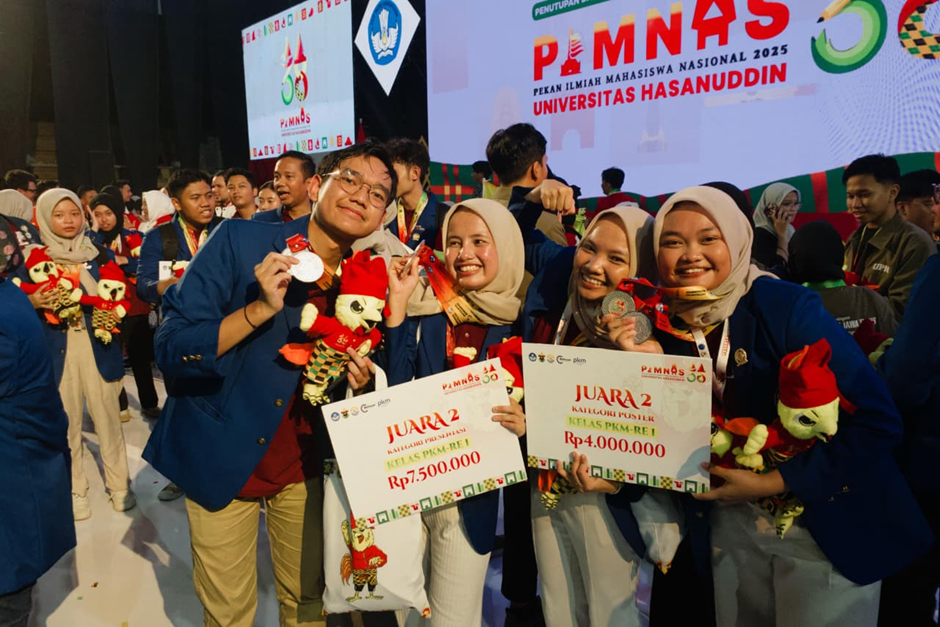
FSM’s achievements were further enhanced by the success of another PKM-RE team led by Nur Hadina Br Purba (FSM), which focused on the development of nano-theranostic agents for the diagnosis and therapy of cervical cancer. The team won two silver medals at once for the presentation and poster categories. In this team, Nur Hadina was supported by Rizka Amalia and Zahra Cahyani Aprilika (FSM), as well as Ihdina Ila Firdausy Susanto (Faculty of Medicine), under the supervision of Prof. Dr. Heri Sutanto, S.Si., M.Si., F.Med. (FSM). This collaboration illustrates how the strength of basic science in FSM can be directly connected to the fields of health and medicine.
In total, 10 FSM students were involved as team leaders or members of medal-winning teams at the 38th PIMNAS, accompanied by dedicated supervisors who actively guided idea development, research, and presentation strategies. Their involvement in cross-faculty teams reflects the nature of PKM as a platform for multidisciplinary collaboration that demands academic ability, creativity, and soft skills.
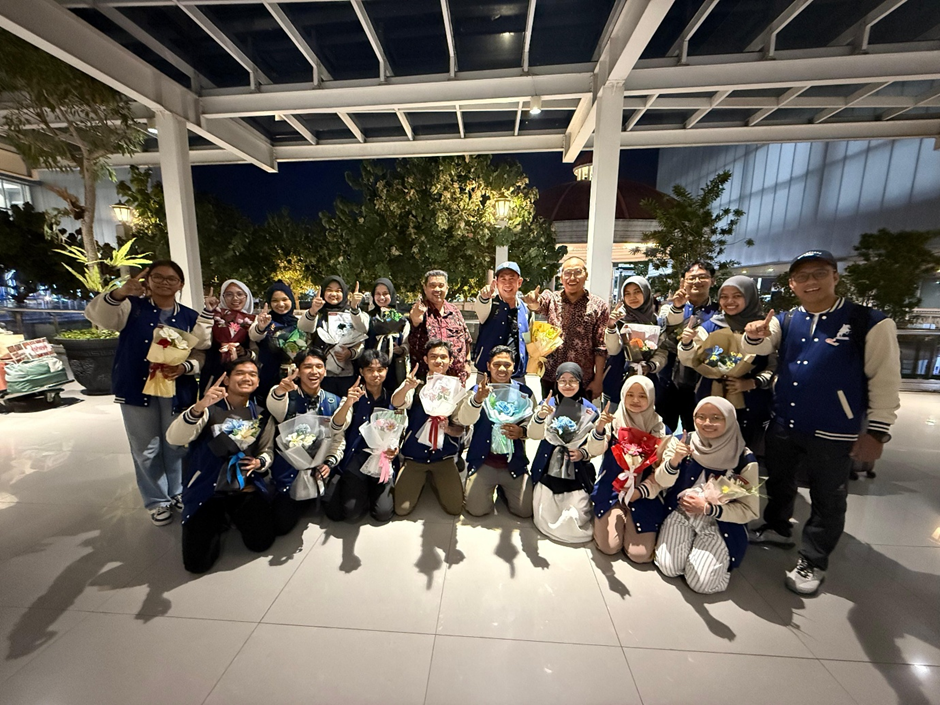
The Dean of FSM expressed their appreciation for the hard work of the students and supervisors who have strived from the proposal and funding stages up to the PIMNAS final. The achievement of two gold medals and three silver medals from three teams led by FSM students is expected to spark enthusiasm among other students to participate in PKM and national scientific competitions. FSM UNDIP will continue to strengthen student research development, proposal mentoring, and an academic ecosystem that supports the creation of innovative works ready to compete at national and international levels.