


Three students from the Faculty of Science and Mathematics (FSM), Universitas Diponegoro (UNDIP), have successfully completed the WCU Student Go International (MBKM) program through an international research internship at the Faculty of Fisheries and Food Science, Universiti Malaysia Terengganu (UMT), Malaysia. The research internship, which took place from January 1 to May 14, 2026, involved Robith Fatihatussaadah and Melia Maulida from the Biology Study Program, as well as Pradigta Danendra Raihan Gumilar from the Biotechnology Study Program.
Throughout the program, the students were supervised by Dr. rer. nat. Anto Budiharjo, S.Si., M.Biotech from FSM UNDIP and Dr. Shumpei Iehata from UMT. Their research focused on Thraustochytrids, a group of marine microorganisms recognized for their remarkable ability to produce high-value lipids, particularly polyunsaturated fatty acids (PUFAs) such as DHA.
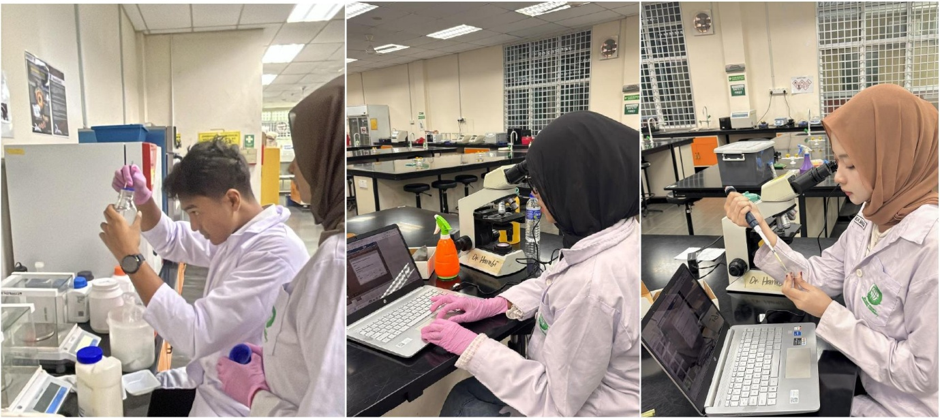
Each student pursued a distinct research focus. Robith Fatihatussaadah conducted molecular characterization of Thraustochytrid isolates collected from the Setiu Wetland using 18S rRNA gene-based molecular identification and analyzed their fatty acid profiles through Gas Chromatography–Flame Ionization Detection (GC-FID) to determine the PUFA content of each isolate.
Meanwhile, Melia Maulida investigated the potential of Thraustochytrids isolated from aquaculture hatchery sludge by performing molecular identification using the 18S rRNA gene marker and characterizing their fatty acid profiles with GC-FID. Her research contributes to the development of sustainable biotechnology applications.
Pradigta Danendra Raihan Gumilar, on the other hand, focused on optimizing culture media for the same isolates to improve growth efficiency and biomass productivity, providing a foundation for future large-scale cultivation.
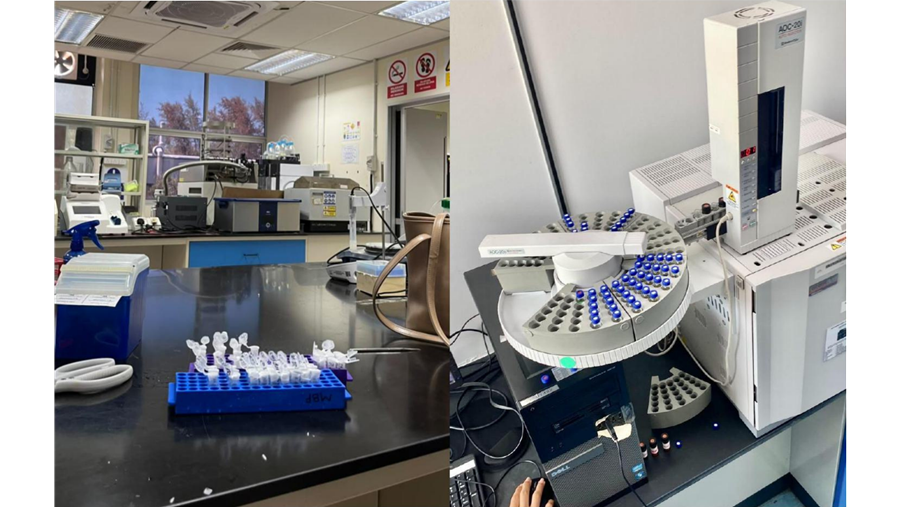
This research was driven by the increasing demand for PUFAs and DHA, which currently rely heavily on fish oil as the primary source. However, the limited availability and fluctuating prices of fish oil have highlighted the need for more sustainable alternatives. Thraustochytrids offer significant potential because they can accumulate high levels of lipids without depending on marine fish stocks. By studying isolates obtained from two different habitats—Setiu Wetland mangroves and aquaculture sludge—the research team aims to broaden scientific understanding of the genetic and biochemical diversity of tropical Thraustochytrids.
During the internship, the students actively participated in a comprehensive range of laboratory activities, including isolate revitalization and subculturing, colony morphology characterization, DNA extraction, 18S rRNA gene amplification, sequencing, and phylogenetic analysis. In addition, they carried out research activities specific to their respective projects, such as culture media optimization, lipid extraction and transesterification, and GC-FID analysis.
Through the WCU Student Go International program, FSM UNDIP students gained valuable international research experience that enhanced their academic competencies while expanding their global research networks. The program also strengthened collaborative research in marine biotechnology between Universitas Diponegoro and Universiti Malaysia Terengganu, supporting UNDIP’s vision of becoming a World Class University. It is hoped that similar programs will continue to grow, providing more opportunities for FSM UNDIP students from various study programs to develop their academic potential and establish international research collaborations.