


The Faculty of Science and Mathematics at Universitas Diponegoro (FSM UNDIP) welcomed a collaborative visit from the Faculty of Forestry, Hasanuddin University (Unhas), Makassar on Thursday, July 2, 2026, at the 4th Floor of the Acintya Prasada Building, FSM UNDIP. The visit served as an important momentum to strengthen interfaculty relations while opening opportunities for interdisciplinary collaboration in education, research, publications, and institutional development.
The visit was attended by the leadership of the Faculty of Forestry Unhas, including the Dean of the Faculty of Forestry, Prof. Dr. Ir. A. Mujetahid M., S.Hut., M.P., IPU., the Head of the Forestry Engineering Study Program, Prof. Dr. Ir. Siti Halimah Larekeng, S.P., M.P., and Gusmiaty, S.P., M.P. Representing FSM UNDIP were the Dean of FSM UNDIP, Prof. Dr. Kusworo Adi, S.Si., M.T., Vice Dean for Academic and Student Affairs, Dr. Ngadiwiyana, S.Si., M.Si., Vice Dean for Resources, Dr. Eng. Adi Wibowo, S.Si., M.Kom., faculty management representatives, and lecturers from the Department of Biology FSM UNDIP.
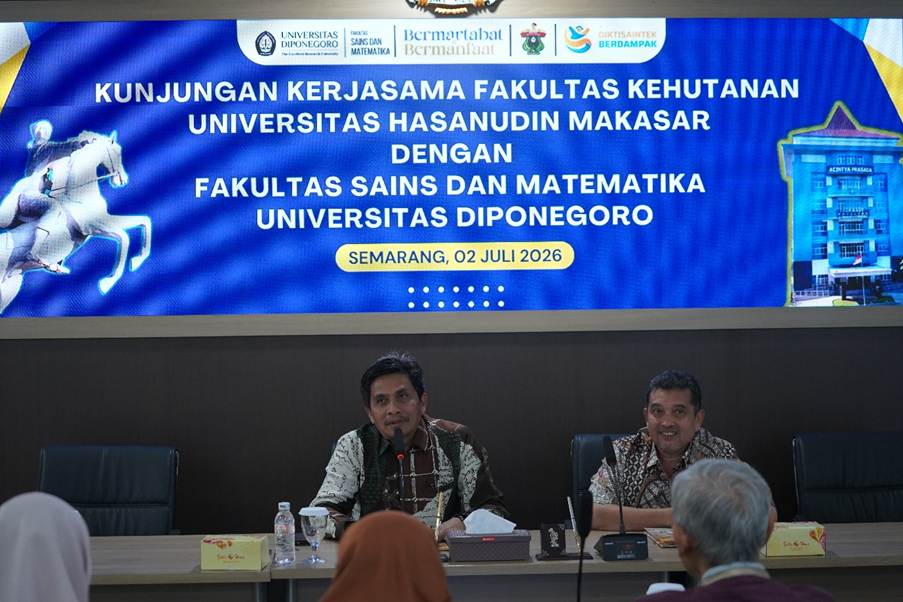
In his remarks, the Dean of the Faculty of Forestry Unhas, Prof. Dr. Ir. A. Mujetahid M., S.Hut., M.P., IPU., expressed his appreciation for the warm welcome from FSM UNDIP. He explained that the initiative for collaboration with FSM UNDIP had actually been planned for quite some time and was expected to continue developing through broader forms of collaboration.
“We would like to expand cooperation not only between forestry-related fields, but also with various other scientific disciplines. Thank you for the warm reception during today’s visit,” he stated.
Meanwhile, the Dean of FSM UNDIP, Prof. Dr. Kusworo Adi, S.Si., M.T., emphasized that FSM UNDIP is highly open to various forms of collaboration that could provide mutual benefits for both institutions.
“We are certainly very open to various collaborations, both in research and other academic activities, so that in the future we can support one another and facilitate the development of both institutions. Whatever collaborations have previously been initiated, we hope they can continue to grow into further partnerships,” he remarked.
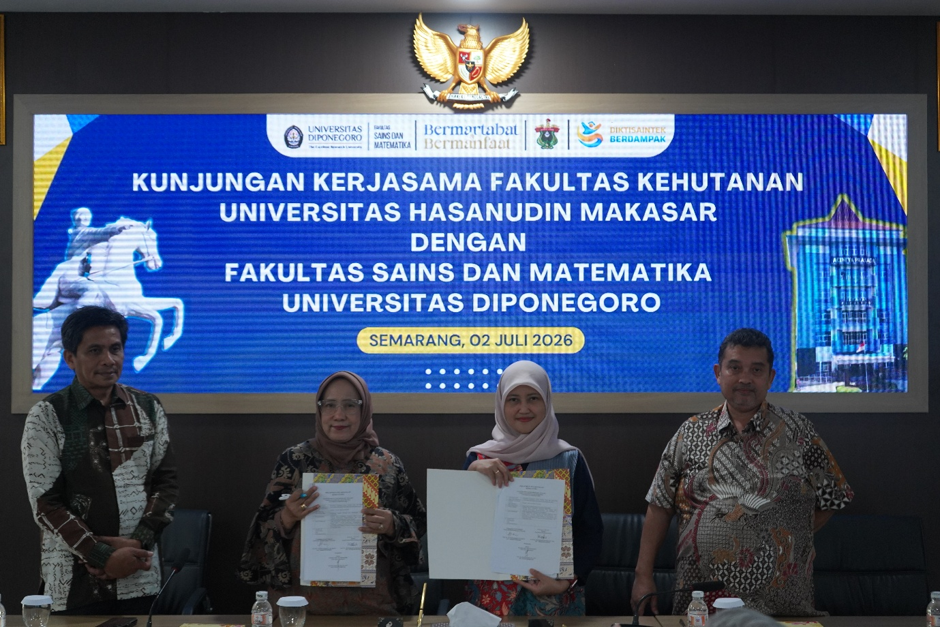
Following the welcoming remarks, the event continued with the signing of an Implementation Agreement (IA) between the Cluster for Paleolimnology (CPalim) FSM UNDIP and the Karst Collaboration Research Center of Hasanuddin University, as well as the signing of another IA between CPalim FSM UNDIP and the Center for Natural Heritage and Biodiversity Research and Development of Hasanuddin University. These agreements marked a strategic step in strengthening research synergy and scientific development, particularly in the fields of environment, biodiversity, and sustainable natural resource studies.
The event then proceeded with a presentation of FSM UNDIP’s institutional profile by the Vice Dean for Resources of FSM UNDIP, Dr. Eng. Adi Wibowo, S.Si., M.Kom. In his presentation, he explained various achievements and developments of FSM UNDIP, including study program accreditations, international collaborations, infrastructure development, and institutional performance achievements, such as reputable international publications, strengthening global research networks, and the implementation of internal quality assurance systems.
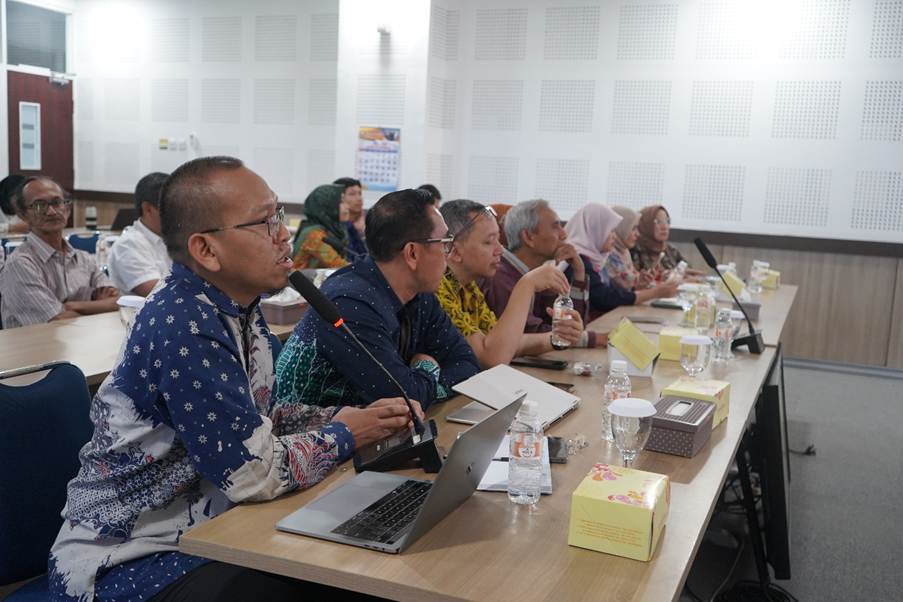
An interactive discussion was subsequently held between FSM UNDIP and the Faculty of Forestry Unhas. Several topics discussed included strategies for strengthening scientific publications, managing reputable journals, implementing UGC at FSM UNDIP, and developing Key Performance Indicators (IKU) within higher education institutions. On this occasion, FSM UNDIP presented its achievements in internationally reputable publications, including Scopus Q1 and Q2 publications as well as faculty IKU accomplishments. The Faculty of Forestry Unhas also shared its institutional achievements, including the successful management of two journals indexed in Scopus Q1 and Q2.
Through this visit, both institutions hope to strengthen synergy and establish sustainable collaboration in education, research, scientific publications, and human resource development. The meeting was conducted in a warm and collaborative atmosphere, serving as an initial step toward broader and more impactful partnerships in the future.