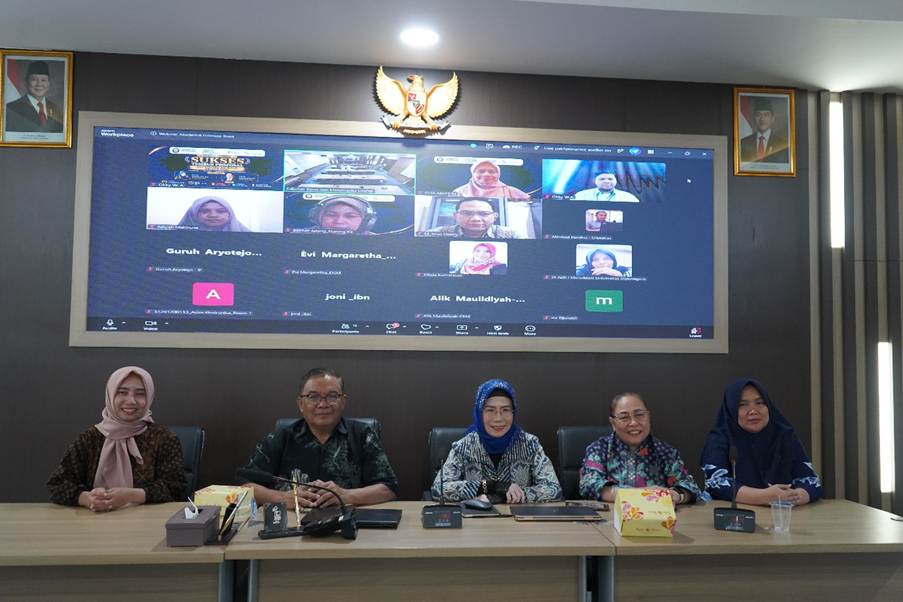
The Faculty of Science and Mathematics (FSM), Universitas Diponegoro, through its Doctoral Program in Science and Mathematics, held a webinar titled “Successfully Securing Research Proposals and Strategies for Research Product Downstreaming” on Wednesday, August 5, 2026. The event was conducted in a hybrid format, with in-person participants attending at the fourth floor of the Acintya Prasada Building, FSM UNDIP, and online participants joining via Zoom Meeting.
The webinar featured Prof. Dr. Widowati, S.Si., M.Si., a lecturer in the Department of Mathematics at FSM UNDIP, and Prof. Dr. Muhammad Nur, DEA, a lecturer in the Department of Physics at FSM UNDIP, as speakers. The event was moderated by Prof. Dr. Dra. Dwi Hudiyanti, M.Sc., a lecturer in the Department of Chemistry at FSM UNDIP, and was attended by faculty leaders, heads of departments, lecturers, and participants joining online.
Before the presentation sessions began, Dr. Eng. Adi Wibowo, S.Si., M.Kom., Vice Dean for Resources at FSM UNDIP, delivered his remarks and officially opened the event. In his speech, he emphasized that research outcomes should not end with scientific publications but should continue to be developed to address the needs of society, government, and industry.
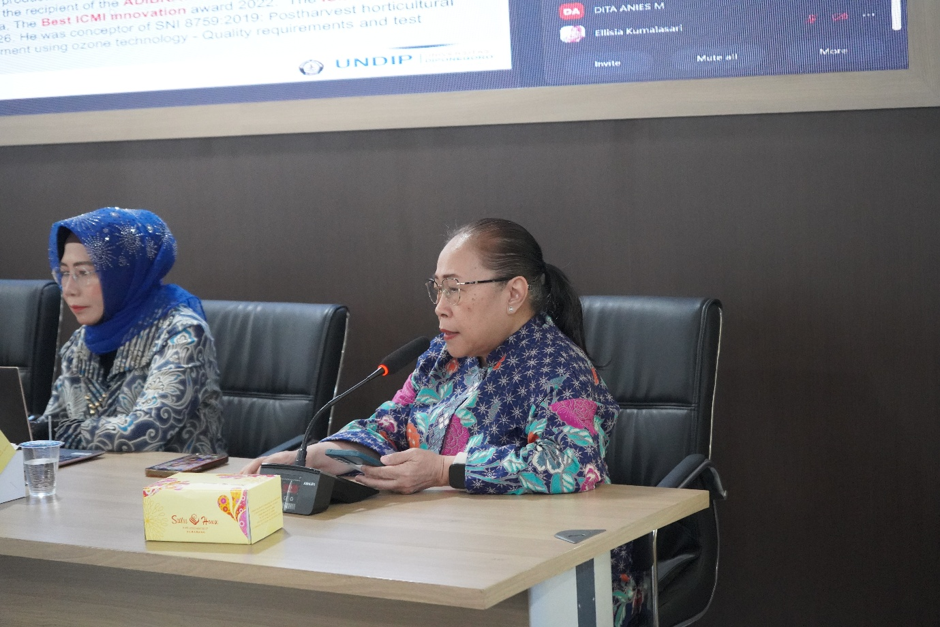
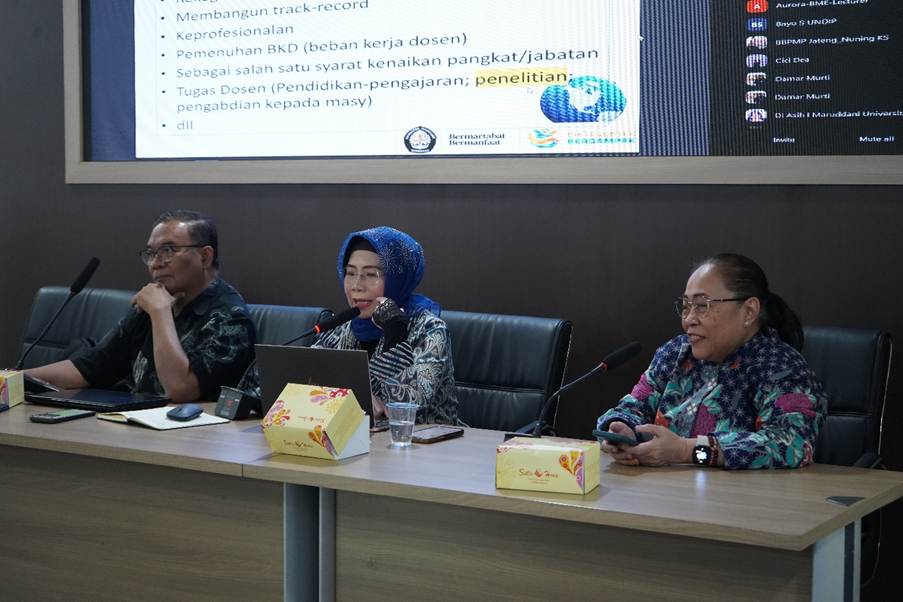
The first presentation was delivered by Prof. Dr. Widowati, S.Si., M.Si., who discussed strategies for securing research grants and advancing research product downstreaming. She explained the importance of research in building lecturers’ track records and gaining international recognition, while also outlining various sources of research funding. In preparing proposals, researchers need to align their topics with the relevant funding schemes, targeted Technology Readiness Levels, required outputs, and National Research Priorities. Proposals should also demonstrate novelty, a clear research gap, urgency, appropriate methods, a well-defined roadmap, a reasonable budget, and a relevant team track record.
She also shared her experience in research downstreaming through the development of crystallographic batik with Batik Nilo Tirto Surakarta and wall ceramic innovations with PT Gyan Kreatif Indonesia in Salatiga. These initiatives applied symmetry group concepts, natural dyes, CAD/CAM technology, CNC machines, and self-cleaning technology to create more innovative products that meet industry needs.
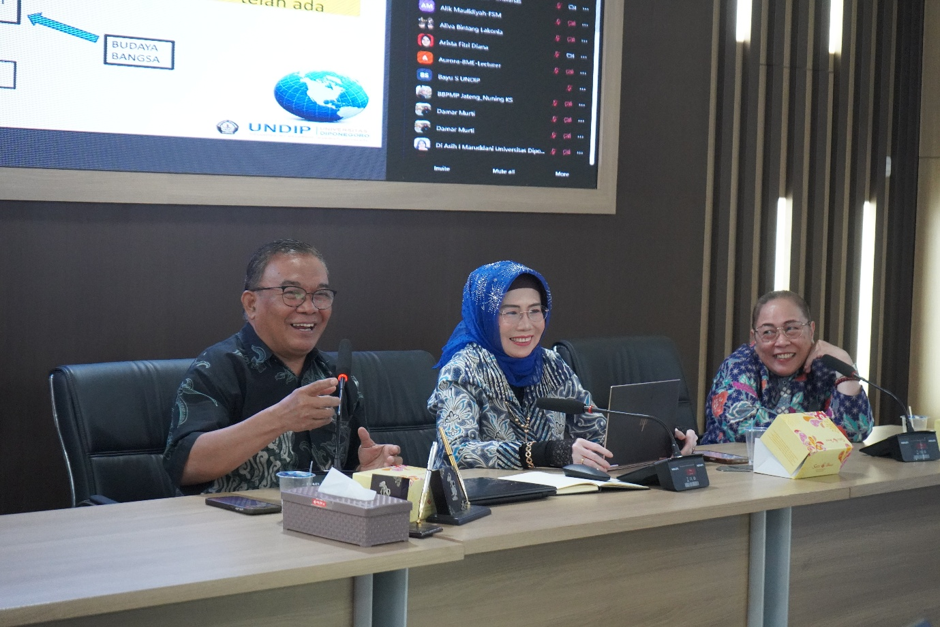
The second presentation was delivered by Prof. Dr. Muhammad Nur, DEA, who discussed the downstreaming and commercialization of research outcomes through case studies involving plasma technology. He explained that innovation development requires synergy among science, technology, industry, and economic growth. To overcome the valley of death between laboratory-scale development and industrial application, technological readiness, funding, intellectual property protection, communication with prospective users, and support from industry partners are required. Implementation strategies may involve technology transfer, the establishment of innovation-based enterprises, or a combination of both approaches.
He also presented the development of plasma technology from the laboratory stage to applications that can benefit society and industry. The examples included cold plasma to reduce the transmission of bacteria, fungi, and viruses; plasma ozone technology for the postharvest treatment of horticultural products; and nano-microbubble plasma ozone technology for industrial wastewater treatment. These technologies were developed through collaboration among institutions and industry partners, including PT Dipo Technology.
Following the two presentations, the event continued with a discussion and question-and-answer session. Participants attending in person and via Zoom were given the opportunity to ask questions and discuss various challenges related to selecting funding schemes, building partnerships, improving technology readiness, and directing research outcomes toward downstreaming and commercialization.
Through this webinar, FSM UNDIP hopes that lecturers will be better prepared to develop strong, relevant, and impact-oriented research proposals. The event also forms part of the faculty’s efforts to build a collaborative research ecosystem in which research outcomes do not merely result in publications but also develop into applicable innovations that provide tangible benefits to society and industry.