

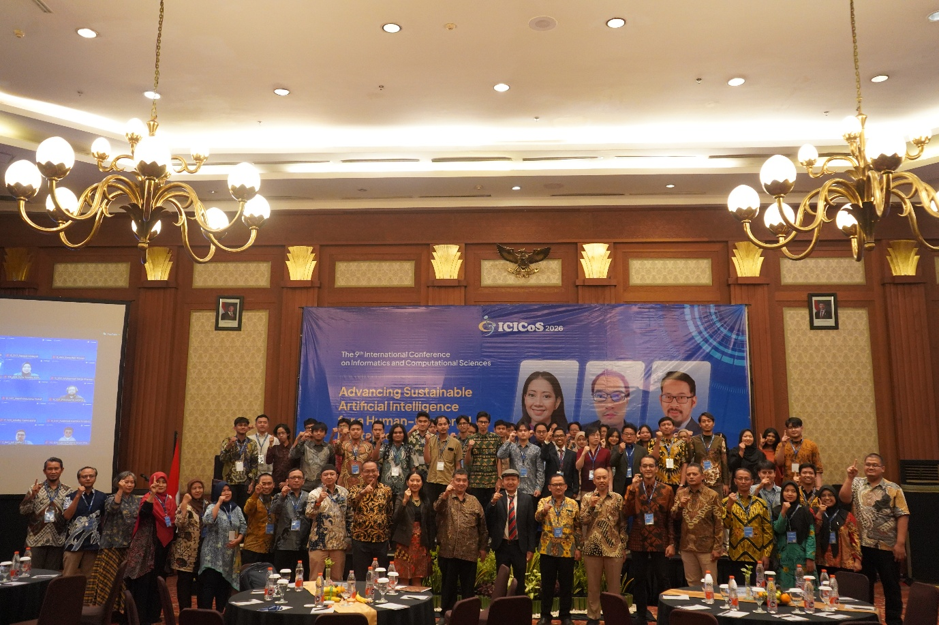
The Department of Informatics, Faculty of Science and Mathematics (FSM), Universitas Diponegoro (UNDIP) organized the 9th International Conference on Informatics and Computational Sciences (ICICoS) 2026 on August 12–13, 2026. Carrying the theme “Advancing Sustainable Artificial Intelligence for a Human-Centered Digital Society,” the conference served as an international forum for academics, researchers, practitioners, and students to exchange ideas, disseminate research findings, and strengthen collaboration in the fields of informatics and computational sciences.
Held in a hybrid format with offline sessions at the Santika Premiere Hotel Semarang and online participation via Zoom, ICICoS 2026 was attended by more than 470 academics, researchers, practitioners, and presenters from 14 countries. Out of 379 submitted papers, all underwent a rigorous peer-review process based on strict evaluation criteria, resulting in an acceptance rate of 40.38 percent.
The theme of ICICoS 2026 emphasized the importance of developing Artificial Intelligence (AI) that is not only oriented toward technological advancement but also pays close attention to sustainability, ethics, inclusivity, and human well-being. In this context, AI and data-driven technologies are expected to support decision-making, enhance productivity, and provide solutions to various real-world challenges in society.
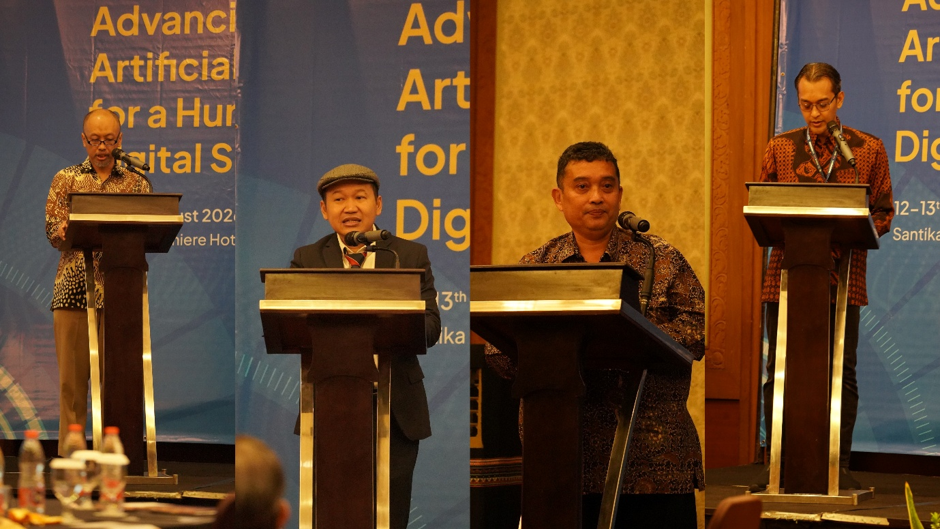
The series of events commenced with an opening ceremony on Wednesday (August 12). The General Chair of ICICoS 2026, Dr. Indra Waspada, S.T., M.TI., stated that ICICoS continues to grow as a platform for academics, researchers, and practitioners to share knowledge, research, and innovation. He emphasized the importance of directing informatics and AI advancements to support community sustainability and well-being while remaining grounded in ethical and inclusive principles.
A similar sentiment was expressed by the Representative of the IEEE Indonesia Section, Dr. Munawar Agus Riadi, S.T., M.T., Ph.D., who underscored the role of ICICoS as a space for exchanging ideas and strengthening collaboration among academics, researchers, and practitioners. According to him, the development of AI must remain centered on human values, ethical responsibility, sustainability, and inclusivity. The IEEE Indonesia Section also remains committed to supporting the enhancement of conference quality, publications, and the research ecosystem in Indonesia.
Meanwhile, the Dean of FSM UNDIP, Prof. Dr. Kusworo Adi, S.Si., M.T., noted that ICICoS is one of FSM UNDIP’s flagship conferences contributing to the advancement of science and multidisciplinary collaboration in informatics and computational sciences. He emphasized that technology must be developed to serve humanity so that the resulting innovations are not only smart and sustainable but also rooted in human values.
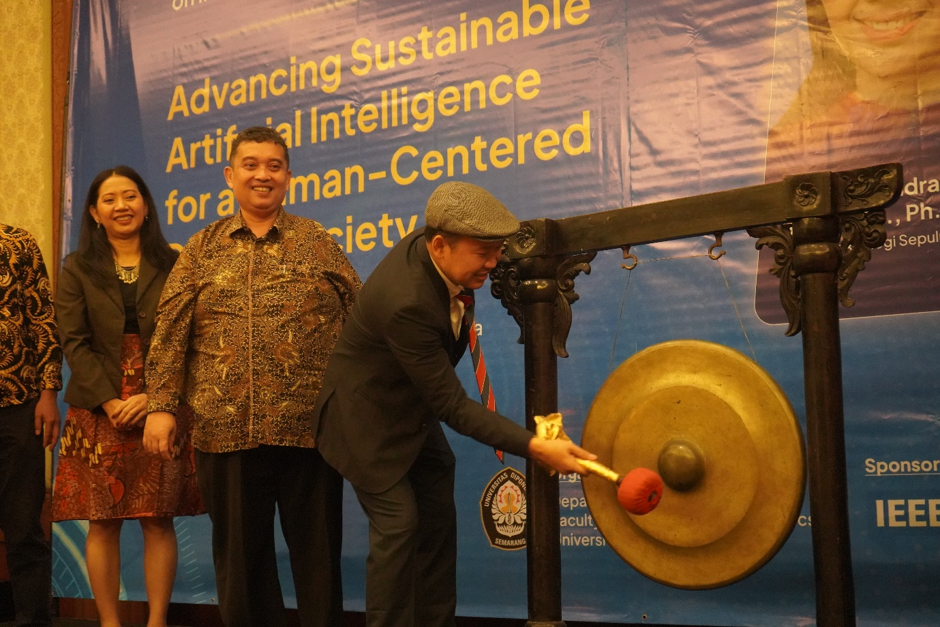
UNDIP’s Vice Rector for Research, Innovation, Cooperation, and Public Communication (Vice Rector IV), Wijayanto, S.IP., M.Si., Ph.D., who attended representing the Rector of UNDIP, expressed his appreciation for the organization of ICICoS as an international academic forum bringing together researchers, academics, professionals, and students from various countries. He asserted that research and innovation must generate knowledge that provides tangible benefits to society. In the development of AI, technology must also be developed and applied ethically, inclusively, sustainably, transparently, and with an orientation toward human values. Wijayanto then officially opened ICICoS 2026.
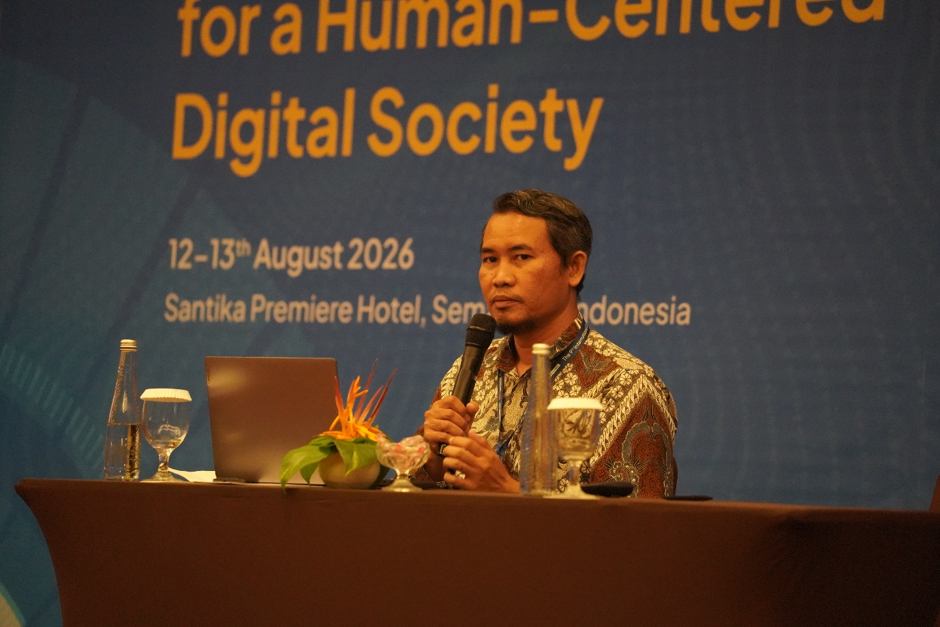
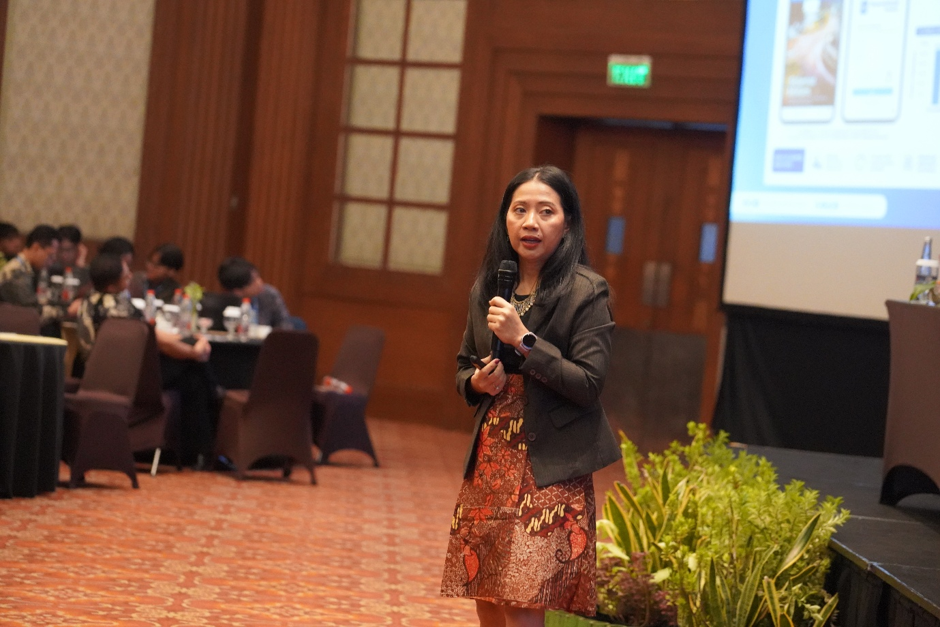
In Plenary Session I, Prof. Mahendrawathi ER, S.T., M.Sc., Ph.D., from Institut Teknologi Sepuluh Nopember, delivered a presentation on the topic “Business Process Management for Human-Centered and Sustainable Digital Transformation.” The session discussed the role of Business Process Management (BPM) in supporting sustainable digital transformation, including the integration of technology and AI in business processes to support human decision-making, enhance collaboration, and strengthen organizational performance.
Subsequently, Plenary Session II featured Assoc. Prof. Shan-Hsiang Shen, Ph.D., from the National Taiwan University of Science and Technology, presenting on “GAN-Based Adversarial Sample Generation for Low-Rate DDoS Attack Detection.” The presentation examined the application of machine learning in cybersecurity, specifically utilizing the Adversarial Generative Network (AdvGAN) approach to generate adversarial samples for testing the resilience of detection models against low-rate Distributed Denial-of-Service (DDoS) attacks.
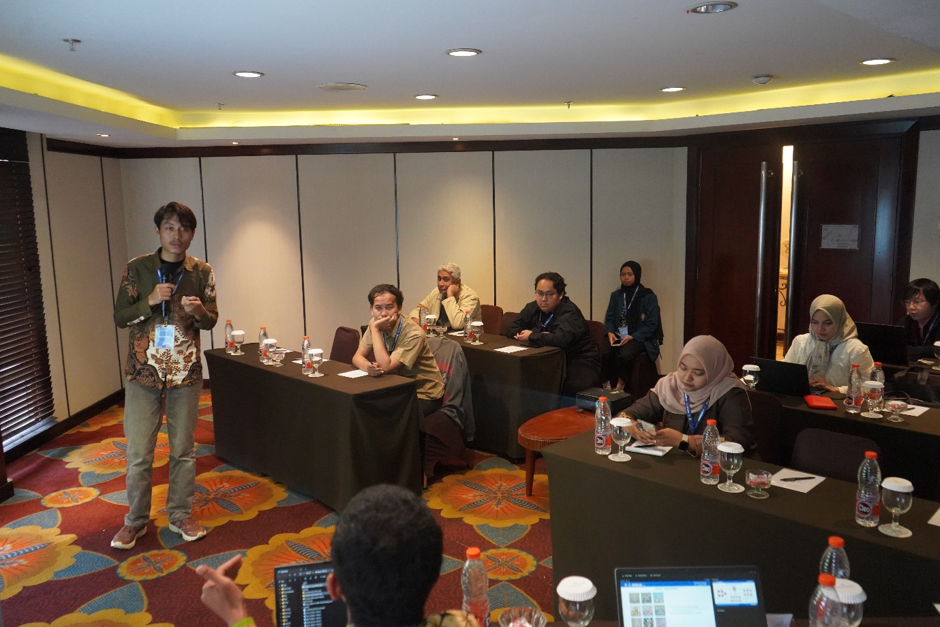
In addition to the plenary sessions, the first day of ICICoS 2026 featured parallel sessions conducted both offline and virtually. These sessions provided a platform for presenters to share their research findings and exchange perspectives with participants from diverse backgrounds and countries.
Entering the second day on Thursday (August 13), the event continued virtually via Zoom. The Head of the Department of Informatics at FSM UNDIP, Dr. Aris Sugiharto, S.Si., M.Kom., opened the proceedings by expressing appreciation for the active participation of all speakers, presenters, moderators, and attendees on the first day. He also welcomed Assoc. Prof. Dr. Amirrudin Bin Kamsin, Ph.D., as a keynote speaker and reiterated the importance of developing AI that is not only technically superior but also responsible, sustainable, and beneficial to society.
In Plenary Session III, Assoc. Prof. Dr. Amirrudin Bin Kamsin, Ph.D., from Universiti Malaya, presented on “Advancing Sustainable Artificial Intelligence for a Human-Centered Digital Society: Lessons from the Transformation of Education.” The presentation explored the application of AI in educational transformation through the perspective of human-computer interaction (HCI), covering adaptive learning, multimodal technologies, and process-based assessments. He stressed the importance of digital readiness, ethical frameworks, and policies to ensure that AI strengthens rather than replaces the human role in education.
The second-day agenda proceeded with online parallel sessions showcasing various research presentations by participants. The conference concluded with closing remarks and an awarding ceremony, marking the successful end of ICICoS 2026.
The organization of ICICoS 2026 was supported by the IEEE Indonesia Section and the FSM UNDIP World Class University Program. This collaboration reinforced the academic quality, international networking, and broader reach of the conference in uniting the academic community, industry, government, and professionals to address various challenges through research and innovation. Through ICICoS 2026, FSM UNDIP, via its Department of Informatics, continues to strengthen its role in fostering knowledge exchange and international collaboration in informatics and computational sciences. The conference is expected to open broader research collaboration opportunities and encourage the birth of AI innovations that are not only technologically advanced but also sustainable, inclusive, and beneficial to society.