

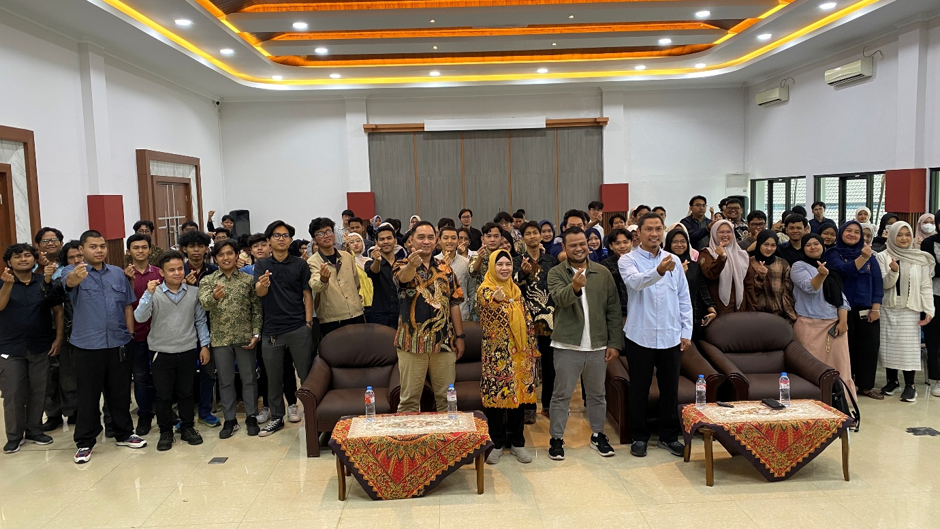
The Department of Physics, Faculty of Science and Mathematics (FSM), Universitas Diponegoro, held an Alumni Sharing session entitled “Research to Impact: The Role of Design Thinking” on Thursday, August 20, 2026. Held at the 3rd Floor Hall of Building G (Old Dean’s Building), FSM UNDIP, the event featured Pridana Nasution, a 2002 Physics alumnus who currently serves as Director of Nabata Consulting, as the guest speaker.
Attended by students of the FSM UNDIP Department of Physics, the event began with remarks from the Head of the Department of Physics, Dr. Eng. Ali Khumaeni, S.Si., M.E. In his remarks, he emphasized the importance of providing students with insights from alumni on how the knowledge and competencies gained during their studies can be applied across various professional fields. Through this activity, students were expected to broaden their perspectives on personal and professional development opportunities while gaining a better understanding of the world of work and innovation through alumni experiences.
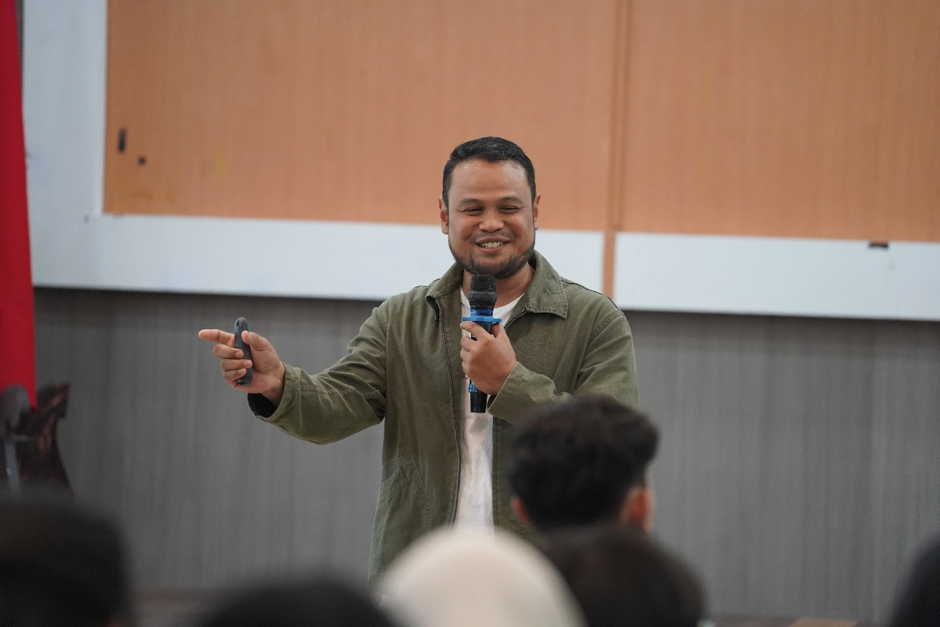
During the main session, Pridana shared his journey and experiences after completing his studies in Physics at Universitas Diponegoro. He invited students to understand how an idea can be developed into something valuable and impactful through concepts such as value innovation, first principle thinking, idea validation, and the Minimum Viable Product (MVP). He emphasized that innovation should not be driven solely by technology, but should also respond to users’ actual needs.
The discussion then focused on design thinking as a user-oriented approach. Students were introduced to its five stages—empathize, define, ideate, prototype, and test—as well as three key principles: empathy, expansive thinking, and experiment. He also explained that developing a solution is an iterative process that needs to be continuously tested and refined based on feedback and real-world conditions.
Several case studies were also presented to illustrate the application of design thinking in product and service development. Through these examples, students were encouraged to understand that effective innovation should consider user needs, technological feasibility, and opportunities for further development. The session also demonstrated that analytical, observational, and experimental skills developed through Physics can be applied in various contexts to create solutions with greater impact.
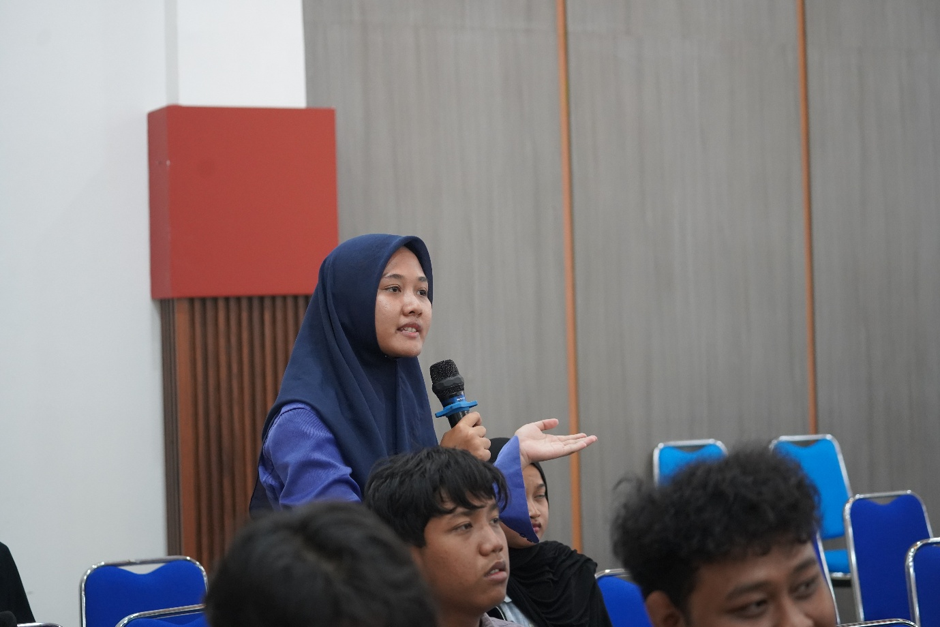
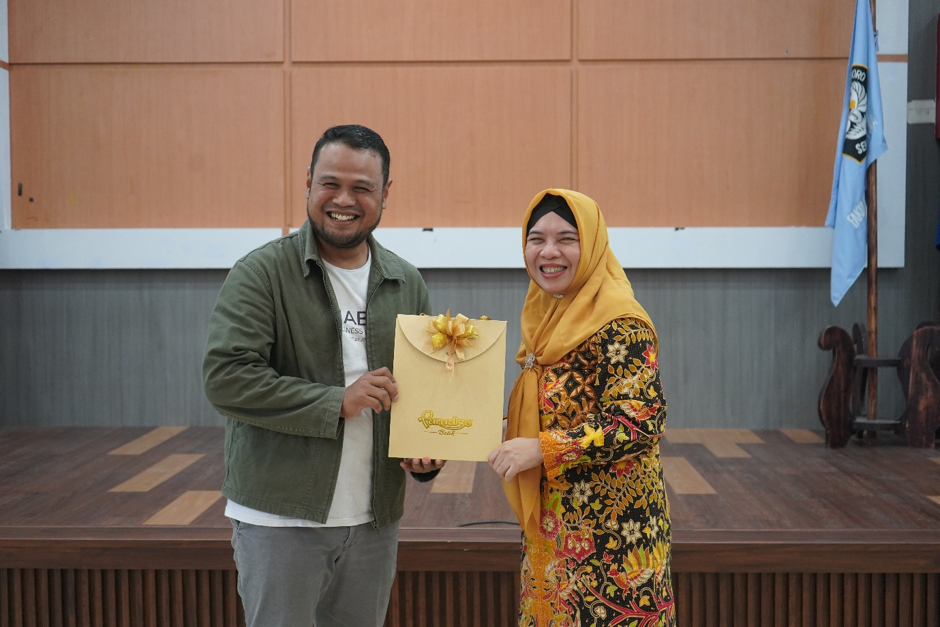
Following the presentation, the event continued with a question-and-answer session. Students had the opportunity to engage directly with the speaker and discuss design thinking, idea development, and his experiences in developing professional competencies after graduating from the UNDIP Department of Physics.
Through this Alumni Sharing session, the FSM UNDIP Department of Physics sought to strengthen connections between alumni and students while providing a platform for sharing professional experiences. The activity is expected to encourage students not only to generate ideas and conduct research, but also to develop them into relevant solutions that can create meaningful impact for society.