

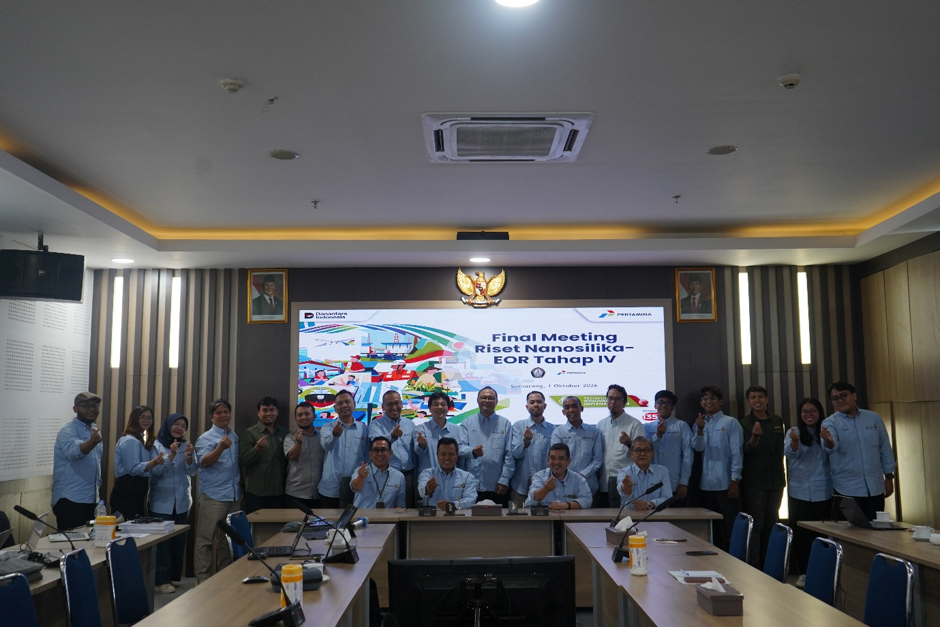
The Faculty of Science and Mathematics, Universitas Diponegoro (FSM UNDIP), continues to promote the development of innovative research with the potential to make significant contributions to industry. One of these efforts is demonstrated through a research collaboration with PT Pertamina (Persero) in developing nanofluid technologies to enhance oil recovery and support reservoir characterization.
This collaboration was further strengthened through the Nano-Enhanced Oil Recovery (Nano-EOR) Workshop and the Nano Tracer Reservoir Research Kick-off Meeting, held on Thursday–Friday, October 1–2, 2026, on the fourth floor of the Acintya Prasada Building at FSM UNDIP. The two-day event brought together UNDIP researchers and Pertamina’s Technology Innovation and Implementation (TII) team to discuss research achievements, potential technological applications, and plans for further collaborative research.
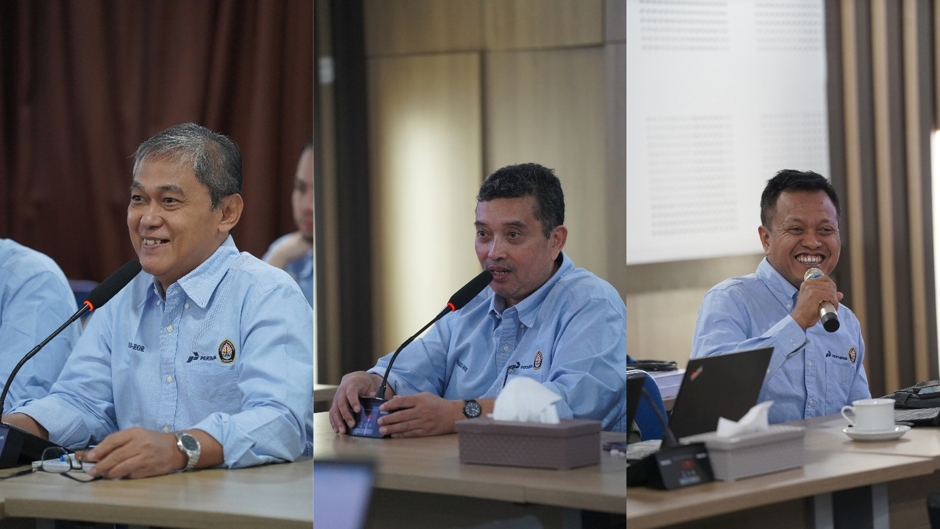
The first day began with a workshop to evaluate the results of Nano-EOR research. The Head of the UNDIP Research Team, Prof. Dr. Agus Subagio, S.Si., M.Si., explained that the development of Nano-EOR technology was approaching its final research stage, with several promising results. The technology is currently undergoing further evaluation to explore opportunities for its application in oil wells.
The Dean of FSM UNDIP, Prof. Dr. Kusworo Adi, S.Si., M.T., expressed his appreciation for the research team’s achievements in advancing nanofluid technology to a promising stage. He expressed hope that the research findings would continue to be refined and developed toward practical implementation, ultimately benefiting Indonesia’s oil and gas industry.
Meanwhile, Pertamina’s representative, Sumadi Paryoto, stated that the progress of Nano-EOR research had aligned with the direction and objectives of the collaboration. Nevertheless, field implementation would require more comprehensive preparation and in-depth technical assessments to minimize potential risks.
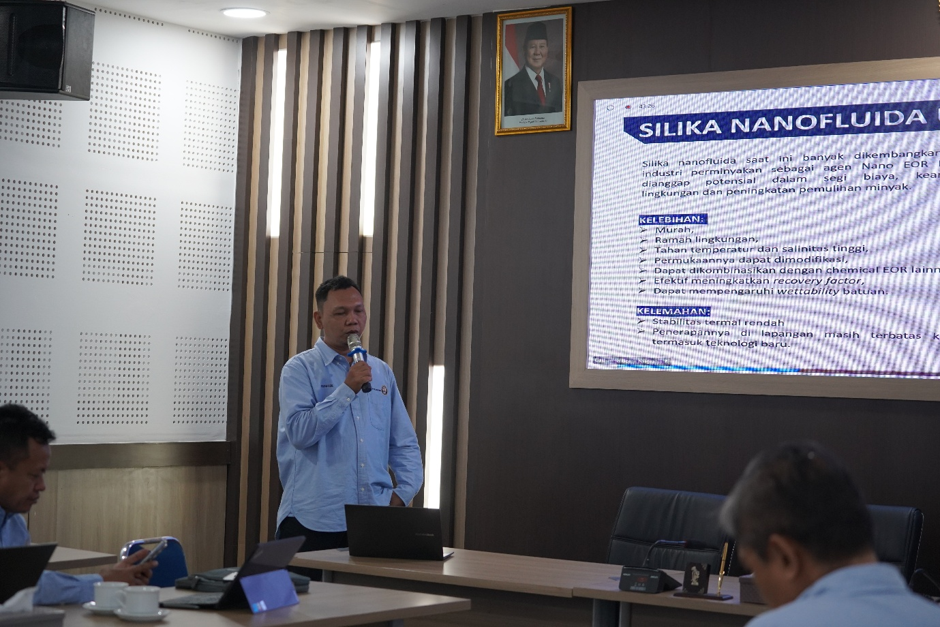
During the research presentation session, Khasan Rowi, S.Si., M.Si., representing the UNDIP research team, explained the successful development of silica nanofluids capable of maintaining good thermal stability for several months. The technology utilizes cost-effective stabilizing materials that are sufficiently available in Indonesia.
Laboratory testing using the coreflooding method demonstrated an incremental oil recovery of 28.3% of the original oil in place (OOIP), using fluids obtained from an oil field in Indonesia. This finding represents a significant achievement in Nano-EOR technology development, highlighting its potential to improve oil recovery efficiency.
The research findings were further supported by reservoir simulations presented by Dr. Pahala D. Sinurat from the Department of Petroleum Engineering, Institut Teknologi Bandung (ITB). The simulations demonstrated the considerable potential for field-scale nanofluid applications. The session continued with discussions involving representatives from Pertamina’s Laboratory Division, Regional I Division, and Upstream Innovation Division regarding future development opportunities and implementation stages.
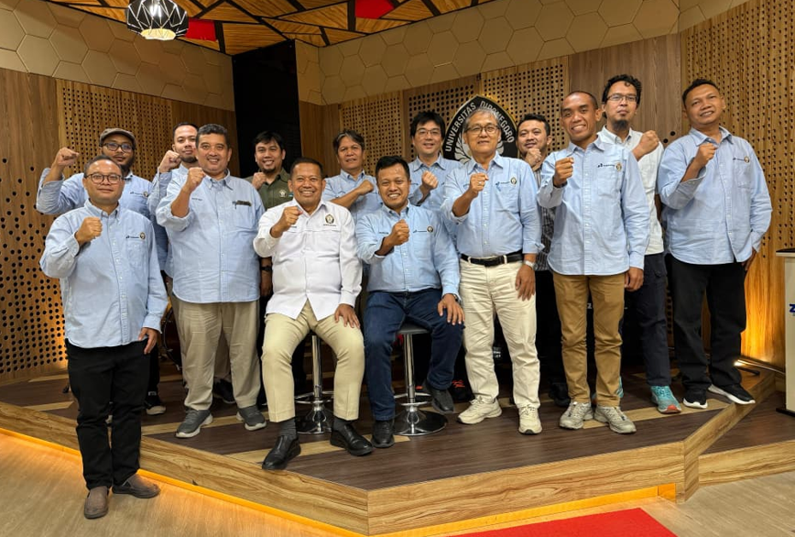
The first day’s activities also included a meeting with the Rector of Universitas Diponegoro, Prof. Dr. Suharnomo, S.E., M.Si. During the meeting, the Rector emphasized the importance of research commercialization and downstream application, ensuring that university innovations extend beyond academic publications and laboratory testing to deliver tangible benefits to society and industry. Collaboration between universities and industry partners is expected to serve as a strategic initiative to strengthen the contribution of research to addressing various national challenges.
On the second day, Friday, October 2, 2026, the activities continued with the Nano Tracer Reservoir Research Kick-off Meeting. The meeting was opened by the Dean of FSM UNDIP, together with the Head of the UNDIP Research Team and representatives from Pertamina. It was also attended by representatives from Pertamina’s Regional I Division, Upstream Innovation Division, business units, and legal division, as well as researchers from UPN Yogyakarta.
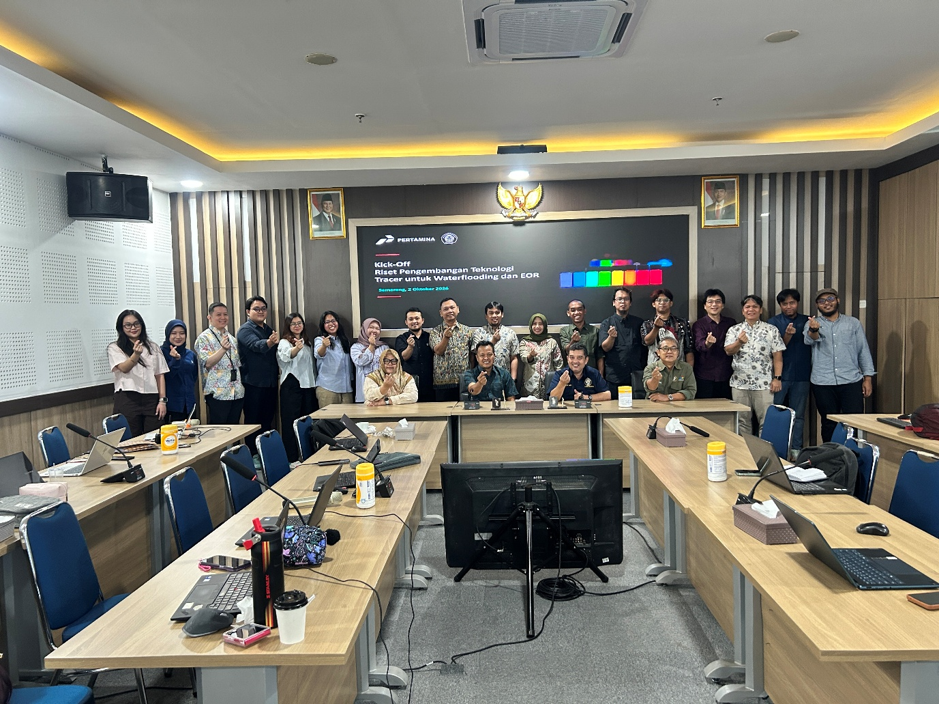
The Nano Tracer research focuses on developing nanofluid technology to trace fluid movement within oil reservoirs. This technology holds strategic potential, considering that reservoir tracer technology in Indonesia still relies heavily on foreign providers, resulting in relatively high costs.
In a presentation delivered by Khasan Rowi on behalf of the UNDIP research team, it was explained that Nano Tracer development would utilize locally sourced raw materials and a novel synthesis method previously developed by UNDIP researchers. This approach is expected to produce more cost-effective technology while enabling production to be scaled up for industrial applications.
Technically, Nano Tracer is designed to help identify connectivity between wells, fluid flow direction and velocity, breakthrough time, and estimated remaining oil within reservoirs. Such information is essential for understanding reservoir characteristics, evaluating the performance of Enhanced Oil Recovery (EOR) methods, and supporting the optimization of oil reservoir management and production strategies.
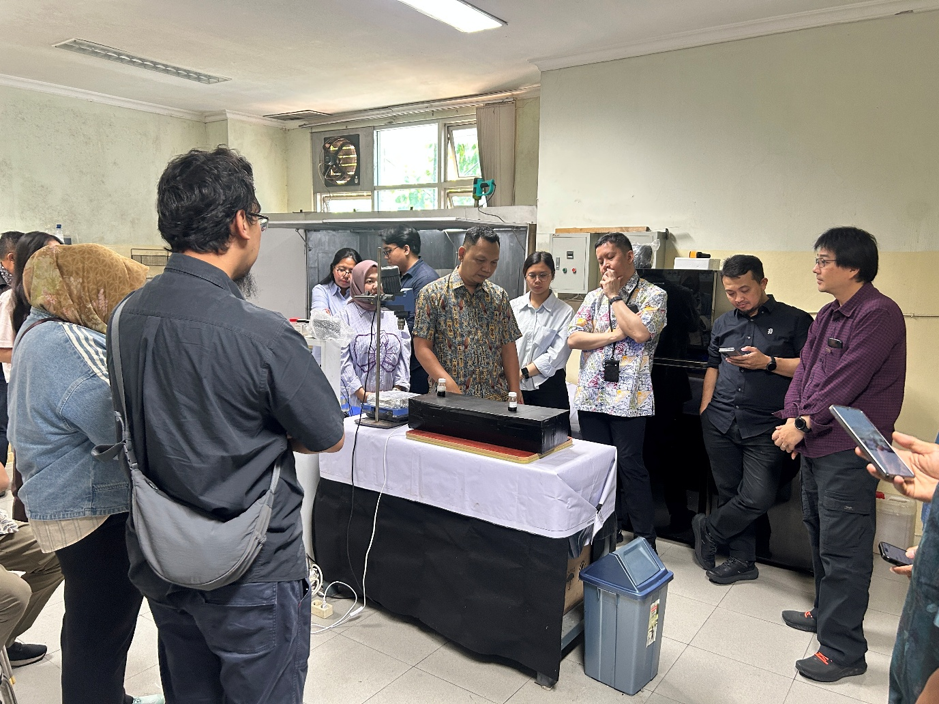
The series of activities concluded with visits to the Nanotechnology Laboratory at the Integrated Laboratory Technical Implementation Unit (UPT) Building and the Laser Laboratory at the Department of Physics, FSM UNDIP. These visits provided an opportunity for the Pertamina team to observe the research facilities supporting nanofluid technology development at UNDIP.
As a follow-up to the collaboration, the signing of a research cooperation agreement for Nano Tracer implementation is planned to be conducted through a desk-to-desk process between the Dean of FSM UNDIP, Prof. Dr. Kusworo Adi, S.Si., M.T., and Pertamina’s Vice President of Technology Innovation Upstream and Low Carbon (TIULC), Ali Sundja.
Through this collaboration, FSM UNDIP seeks to strengthen its role in producing science-based innovations that not only contribute to academic advancement but also have the potential to address industrial needs. The development of Nano-EOR and Nano Tracer technologies is expected to become a sustainable initiative in promoting research commercialization, utilizing local resources, and strengthening national technological independence in the energy sector.